
For most contact center teams, the problem is no longer too few tools. It is too many. Companies adopt new customer experience (CX) software faster than they can integrate it, and the result is tool sprawl, fragmented data, and burned-out teams.
Two data points show the scale of the problem:
- According to Okta’s 2025 Businesses at Work report, the average company now runs 101 software applications, up from around 90 in prior years. More apps mean more data silos and more context switching for agents.
- Gartner found that only 28% of AI use cases in IT infrastructure and operations fully meet their ROI expectations, while 20% fail outright (survey of 782 I&O leaders, late 2025). Buying more technology does not guarantee a return.
What teams need first is a unified foundation, built on the capabilities that genuinely move the operation forward. Below are the 10 contact center software features worth prioritizing, ordered from operational essentials to advanced automation.
1. True Omnichannel Communication
True omnichannel communication brings every customer channel into a single interface: voice, email, SMS, WhatsApp, and social media. An agent sees the full conversation history on one screen. Unlike multichannel setups that connect separate tools, omnichannel keeps context intact when a customer moves between channels, which removes repetition and cuts handling time.
| Multichannel | Omnichannel | |
| Channel setup | Separate, disconnected tool per channel | All channels in one unified interface |
| Customer history | Fragmented across systems | Single chronological timeline |
| Switching channels | Customer repeats the issue | Context carries over automatically |
| Agent view | Multiple apps and tabs | One screen |
| Data silos | Yes | No |
| Typical result | Higher AHT, lower CSAT | Lower AHT, higher CSAT |
- The Common Mistake: Confusing multichannel with omnichannel, and buying separate, disconnected tools for different channels (one app for WhatsApp, another for phone calls).
- The Cost: A broken customer experience and agent fatigue. When a customer switches from chat to a call, they repeat the issue from scratch. CSAT drops, interaction times rise, and agents get frustrated.
- How to Avoid It: Choose a solution built on a single-interface architecture, where every digital and voice channel flows into one chronological timeline for the agent. See how Call Center Studio’s omnichannel platform handles this.

2. Seamless CRM and Third-Party Integrations
CRM integration connects your contact center to the systems where customer data already lives, such as Salesforce, HubSpot, or Zoho. When a customer connects, the platform triggers a screen-pop with their profile, recent purchases, and open tickets. Native integrations and open APIs let agents personalize service immediately instead of switching tabs to find context.
- The Common Mistake: Treating the CRM and the contact center as separate systems, which keeps customer profiles isolated from the communication interface and forces manual data syncing.
- The Cost: Rising Average Handle Time (AHT). Agents lose valuable seconds on every call digging through separate tabs for user details. Across thousands of interactions, that hidden delay inflates operational costs.
- How to Avoid It: Prioritize CCaaS platforms with native, bidirectional CRM integrations or robust open APIs, and make sure the software supports automatic screen-pops on call arrival.
In a Salesforce-integrated deployment, Call Center Studio helped an eBay subsidiary cut 1.5 minutes of talk time per call during peak periods (case study).
3. Intelligent Call Routing
Intelligent call routing directs each interaction to the agent best equipped to handle it, using Automatic Call Distribution (ACD) and skills-based routing. Instead of a first-come queue, the system reads the customer’s intent and history and matches them to the right agent. This keeps wait times low and first-contact resolution (FCR) high.
- The Common Mistake: Relying on first-come, first-served queues that treat every request and every agent’s skill level the same.
- The Cost: Repeated internal transfers and falling FCR. A high-value VIP client or a complex technical issue lands with a newly hired general agent, leading to multiple transfers and dropped calls.
- How to Avoid It: Map your customer journeys and deploy skills-based routing combined with data-directed routing, which reads CRM data to match premium clients with senior agents instantly.
4. Robust Security and Compliance Standards
Security and compliance protect the customer data your platform handles, which matters most for teams in regulated industries. A credible CCaaS vendor should offer GDPR, PCI-DSS, and HIPAA compliance, along with secure call recording and role-based access control. These features keep your operation aligned with international regulations as you centralize data in the cloud.
- The Common Mistake: Trading compliance for a lower price by choosing a cheaper, uncertified platform on the assumption that breaches only happen to large corporations.
- The Cost: Legal fines and lost reputation. A single unencrypted call recording can trigger penalties under GDPR or PCI, and a data leak damages client trust permanently.
- How to Avoid It: Ask to see current, official compliance certifications before signing, and confirm the platform includes native data masking and automated pausing for secure payment inputs. Review Call Center Studio’s security and compliance standards.
5. Streamlined Agent Desktop and Post-Call Automation
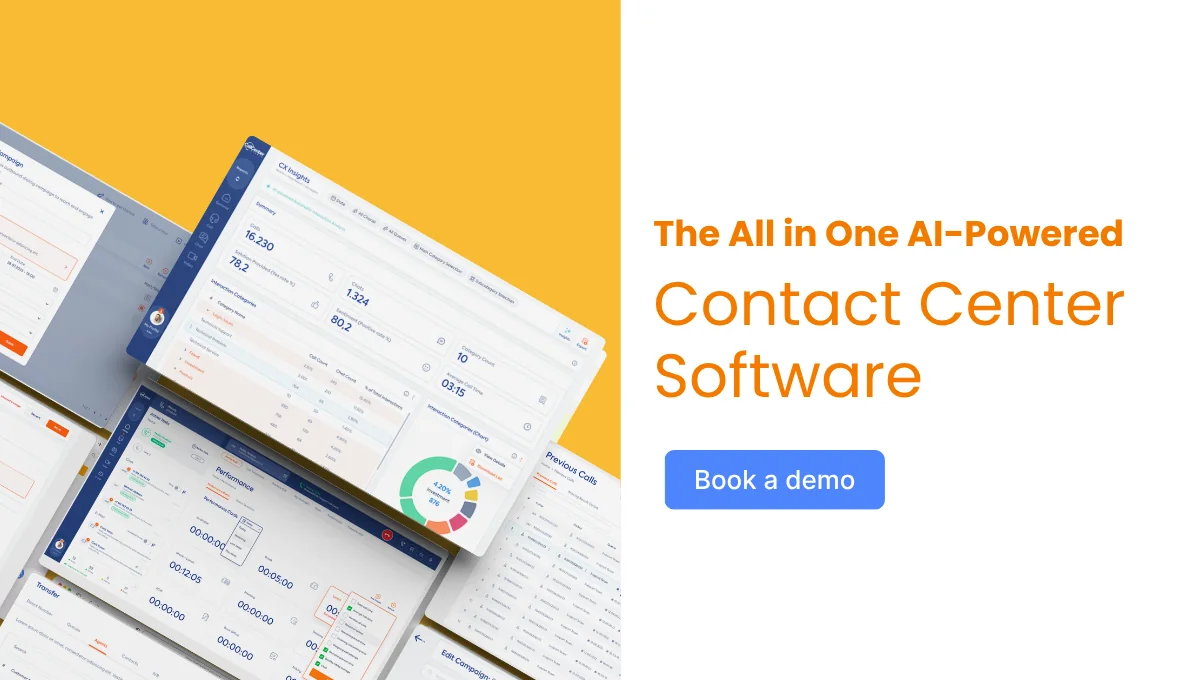
A streamlined agent desktop gives agents a clean, single workspace and automates repetitive wrap-up work. Automated After-Call Work (ACW) handles wrap-up codes, call logging, and follow-up triggers, so agents move to the next customer faster. Agent experience shapes customer experience: a clear interface keeps quality and tone consistent.
- The Common Mistake: Overloading the interface with unnecessary buttons, manual logging fields, and rigid processes.
- The Cost: Data-entry errors and high agent turnover. Hours of repetitive admin work cause fatigue, poorly logged customer data, and churn.
- How to Avoid It: Choose an agent-centric, minimalist interface. During a trial, count how many clicks it takes to wrap up a call, and aim to automate at least 80% of data logging.
6. Real-Time Analytics and Comprehensive Reporting
Real-time analytics show supervisors what is happening on the floor as it happens, through live dashboards tracking KPIs such as abandonment rate, AHT, and CSAT. With live data, supervisors can spot bottlenecks and adjust queues immediately, rather than reacting days later from a monthly report.
- The Common Mistake: Relying only on end-of-month PDF reports, and managing daily staffing from historical data instead of current trends.
- The Cost: Uncontrolled service-level drops. If abandonment spikes or an issue goes unnoticed at 10:00 AM, waiting until month end is too late to save the SLA.
- How to Avoid It: Use software with live, customizable supervisor dashboards and instant threshold alerts, for example a notification the moment a queue wait time passes two minutes.
7. Native Quality Assurance (QA) and Performance Monitoring
Native QA tools let supervisors monitor and improve agent performance from inside the platform, through live call whispering, silent monitoring, and call barging. Built-in screen recording and automated call scoring make evaluation consistent. Where analytics show what is happening, QA shows why, which is what continuous improvement depends on.
- The Common Mistake: Using separate, disconnected QA systems and exporting recordings into spreadsheets or third-party tools for evaluation.
- The Cost: Wasted managerial hours and inconsistent quality. Without integrated QA, managers spend more time handling raw audio files than coaching, and poor agent habits slip through unnoticed.
- How to Avoid It: Choose a CCaaS solution with integrated QA modules, where a supervisor can click an agent’s scorecard, listen to the specific recording, and leave feedback instantly.
8. Workforce Management (WFM) and Optimization
Workforce management (WFM) forecasts interaction volume from historical data and builds optimized agent schedules across channels and shifts. Accurate forecasting prevents understaffing during peak hours and overstaffing during quiet periods, which keeps costs balanced and protects agents from burnout.
- The Common Mistake: Scheduling from guesswork or spreadsheets to predict staffing across a complex, multi-channel environment.
- The Cost: Wasted budget or lost revenue. Understaffing drives hold times up and customers away; overstaffing means paying for idle agents.
- How to Avoid It: Use WFM powered by predictive analytics. Let the software analyze your last 12 months of call volume to generate optimized shift patterns automatically.
9. Conversational AI and Virtual Agents
Conversational AI and virtual agents handle routine work so human agents can focus on complex issues. A capable virtual agent can:
- Resolve high-volume FAQs instantly, without human help
- Authenticate customer identity before transferring to a live queue
- Deliver context-rich summaries to agents, speeding up resolution
- The Common Mistake: Using AI as a barrier rather than a bridge, with rigid chatbots that trap customers in loops and offer no easy way to reach a human.
- The Cost: Customer frustration. Poorly implemented AI becomes an obstacle, and customers often vent publicly on social media, which harms the brand.
- How to Avoid It: Design AI workflows with a human-in-the-loop fallback. If the bot cannot resolve an issue within two steps, it should transfer the call and the full chat transcript to a live agent. Learn how Call Center Studio’s conversational AI is built around this.
10. High Scalability and Flexible Cloud Architecture
A native cloud architecture lets you scale agent seats up or down on demand, so you pay only for what you use. Whether you are entering new markets, supporting remote teams, or absorbing seasonal spikes, flexible cloud infrastructure removes the hardware limits and lock-in contracts that slow growth.
- The Common Mistake: Buying for today instead of tomorrow, by investing in rigid systems with fixed seat capacity or restrictive lock-in contracts.
- The Cost: Missed growth and high capital costs. A seasonal surge forces you to wait weeks for hardware deployment or pay unexpected upgrade fees.
- How to Avoid It: Choose a cloud-native architecture with flexible, pay-per-use scaling, where you can add or remove agents with a single click from an admin dashboard.
In one cloud migration, a Call Center Studio client scaled from 70 to over 300 agents in just a few months (case study).
Checklist: Is Your Contact Center Ready for the Future?
Use this checklist to gauge whether your current platform covers the essentials. The more boxes you can tick, the more resilient your operation.
☐ All channels (voice, email, SMS, WhatsApp, social) run in one unified interface
☐ Native, bidirectional CRM integration with automatic screen-pop
☐ Skills-based and data-directed call routing
☐ GDPR, PCI-DSS, and HIPAA compliance with role-based access control
☐ Minimalist agent desktop with automated after-call work
☐ Real-time dashboards with threshold alerts
☐ Integrated quality assurance and call scoring
☐ Predictive workforce management
☐ Conversational AI with a human-in-the-loop fallback
☐ Cloud-native, pay-per-use scalability
You do not need a different vendor for each capability. Call Center Studio delivers all 10 of these features in a single, unified cloud platform, so you can stop managing fragmented subscriptions and complex integrations. The platform holds a 4.8/5 rating on G2.
Schedule a personalized demo with our CX team
FAQ
What is CCaaS (Contact Center as a Service)?
CCaaS, or Contact Center as a Service, is cloud-based contact center software delivered over the internet rather than installed on-premise. It combines channels, routing, analytics, and often AI in one platform, and it scales by subscription, so businesses pay for the agent seats they use without maintaining hardware.
What is the difference between multichannel and omnichannel contact center solutions?
Multichannel solutions offer customer service across several channels (phone, email, WhatsApp) as separate, isolated tools. Omnichannel solutions connect those channels in one interface, so agents see a customer’s full conversation history across every touchpoint. This removes data silos and stops customers from repeating themselves when they switch channels.
Why is CRM integration essential for cloud contact center software?
CRM integration keeps customer data in sync with your communication tools. When an interaction starts, the system shows a screen-pop with the customer’s profile, purchase history, and open tickets. This saves seconds on every call, lowers Average Handle Time (AHT), and lets agents deliver personalized service.
How does a cloud contact center platform lower operational costs?
Cloud platforms run on flexible infrastructure, so you pay only for the active agent seats you need instead of buying expensive on-premise hardware. Predictive workforce management prevents costly overstaffing, and conversational AI handles high-volume FAQs, freeing agents for complex work.
What is the difference between CCaaS and on-premise contact center software?
On-premise contact center software is installed and maintained on your own servers, with upfront hardware costs and manual scaling. CCaaS runs in the cloud, scales seats on demand, and shifts maintenance to the vendor. CCaaS suits remote teams and seasonal demand, while on-premise can suit organizations with strict data-residency requirements.