

When choosing a Contact Center as a Service platform, companies frequently make a fundamental error: they choose a vendor based solely on their own current size.
However, a modern cloud system should support you whether you are managing 15 agents today or scaling to 1,500—especially during an unpredicted demand spike next quarter. Choosing the wrong subscription model scales your Total Cost of Ownership (TCO) exponentially.
In this comprehensive guide, we have listed and evaluated 8 prominent CCaaS platforms. Our contact center software comparison analyzes these platforms across 10 critical categories and breaks down each platform’s architectural DNA, live user feedback, and cost structures derived from actual deployment data.
While they can all technically serve operations of any size, their underlying architectures, pricing structures, and implementation models make them suitable for vastly different business types.
1. Genesys Cloud CX
Built as a highly stable microservices framework natively on AWS, Genesys is widely considered the safe corporate standard for heavy omnichannel contact center routing and extensive compliance needs.
- Estimated Aggregate Reviews (G2, Capterra, Software Advice): 2,500+ across all major aggregators.
- Years in Business: 35+ years (Evolved from legacy hardware to pure cloud).
- Country of Origin: United States (Headquartered in Menlo Park, California).
- Funding/Ownership: Private Equity Backed (Major historical and institutional backing from Hellman & Friedman, Permira, and Salesforce Ventures).
- Core Strength: Unmatched voice architecture stability, complex predictive routing, and deep journey orchestration capability.
What Users Love: The granular design of the Interactive Voice Response (IVR) “Architect” tool and its ability to handle millions of simultaneous interactions without dropping voice paths.
What Users Dislike: The fixed-licensing model can make seasonal volume adjustments highly expensive, driving up your Total Cost of Ownership (TCO). Smaller IT teams note that the platform is too vast, making it hard to manage without dedicated certified admins.

2. NICE CXone
NICE CXone is a complete Customer Experience (CX) data suite. It wraps native Workforce Optimization (WFO), Quality Assurance (QA), and advanced analytical forecasting around a robust routing engine.
- Estimated Aggregate Reviews (G2, Capterra, Software Advice): 2,800+ reviews across major aggregators.
- Years in Business: 20+ years (Evolved via NICE’s acquisition of inContact).
- Country of Origin: Israel / United States (NICE Ltd. is headquartered in Ra’anana, Israel).
- Funding/Ownership: Publicly Traded (NASDAQ: NICE).
- Core Strength: Elite native workforce management (WFM) tools and enterprise compliance infrastructure.
What Users Love: The sheer granularity of data it tracks; forecasting call spikes and scheduling agents based on historical queue patterns is incredibly precise.
What Users Dislike: Steep learning curves and high operational overhead. Users frequently mention that changing basic administrative parameters or adjusting their omnichannel contact center routing paths requires reliance on pricey professional services.
3. Five9
Five9 is highly optimized for blended environments that require a careful balance of high-volume outbound campaigns and reliable inbound routing, boosting overall scalability for sales-driven teams.
- Estimated Aggregate Reviews (G2, Capterra, Software Advice): 2,000+ reviews across major networks.
- Years in Business: 25 years (Founded in 2001).
- Country of Origin: United States (Headquartered in San Ramon, California).
- Funding/Ownership: Publicly Traded (NASDAQ: FIVN).
- Core Strength: Advanced outbound dialing engines (predictive, power, progressive) paired with native compliance protections.
What Users Love: The efficiency of its blended queues and built-in Interactive Voice Response (IVR) options, allowing agents to shift instantly from inbound support to outbound follow-ups as call volume drops.
What Users Dislike: The visual agent and supervisor interfaces feel slightly dated compared to newer, cloud-native entrants, and it typically requires strict minimum licensing commitments that hurt early-stage scalability.
4. Talkdesk
Talkdesk carved out its market share by proving that enterprise-grade CCaaS platforms do not have to look or feel like a dense 90s database system. It is highly valued for its visual workspace designers.
- Estimated Aggregate Reviews (G2, Capterra, Software Advice): 3,500+ reviews globally.
- Years in Business: 15 years (Founded in 2011).
- Country of Origin: Portugal / United States (Dual-headquartered in Lisbon and San Francisco).
- Funding/Ownership: Venture Capital / Private Backed (Over $450M+ raised in funding; valued as a unicorn with backing from Viking Global Investors and Threshold Ventures).
- Core Strength: Low-code/no-code administrative controls and clean, intuitive agent desktop user experiences.
What Users Love: The speed at which business managers can modify routing paths and live announcements without requiring an engineering ticket.
What Users Dislike: Users note that while its vertical-specific packages (like healthcare and banking) are strong, advanced custom reporting options can feel rigid compared to legacy analytics frameworks.
5. Amazon Connect
Amazon Connect is a complete departure from traditional software models. It is a highly customizable, API-first set of cloud bricks that lets companies build their own custom contact center infrastructure.
- Estimated Aggregate Reviews (G2, Capterra, Software Advice): 1,200+ reviews across primary tech aggregators.
- Years in Business: 9 years (Launched publicly in 2017).
- Country of Origin: United States (Seattle, Washington).
- Funding/Ownership: Built and owned entirely by Amazon Web Services.
- Core Strength: Pure pay-as-you-go pricing (pay down to the precise second of use) with no seat commitments.
What Users Love: The financial elasticity and consumption-based pricing. If you have 0 calls, you pay $0. If you scale to 20,000 agents for an afternoon, you pay only for that exact usage, minimizing unnecessary Total Cost of Ownership (TCO).
What Users Dislike: It offers minimal out-of-the-box user interfaces. If you don’t have a team of cloud engineers or AWS Lambda developers on your payroll, setting up and supporting standard dashboards or basic omnichannel contact center queues can be a major challenge.
6. Aircall
Aircall approaches the market from an app-centric angle, prioritizing fast deployments and immediate integrations with existing SaaS ecosystems to deliver the best contact center software experience for agile SMBs.
- Estimated Aggregate Reviews (G2, Capterra, Software Advice): 1,500+ reviews across SMB and mid-market networks.
- Years in Business: 12 years (Founded in 2014).
- Country of Origin: France (Founded in Paris, corporate headquarters in New York).
- Funding/Ownership: Private Equity/Venture Capital (Raised over $220M, backed by Goldman Sachs, DTCP, and Adams Street Partners).
- Core Strength: Near-instantaneous software setup and out-of-the-box, single-click CRM synchronizations.
What Users Love: The simple, clean user experience. Agents can be fully onboarded and making calls within 10 minutes of account creation.
What Users Dislike: It is essentially a voice-first platform. Teams requiring complex omnichannel contact center automation, advanced chat routing rules, or deeply embedded Workforce Management (WFM) tools quickly outgrow its capabilities.
7. Call Center Studio (CCS)
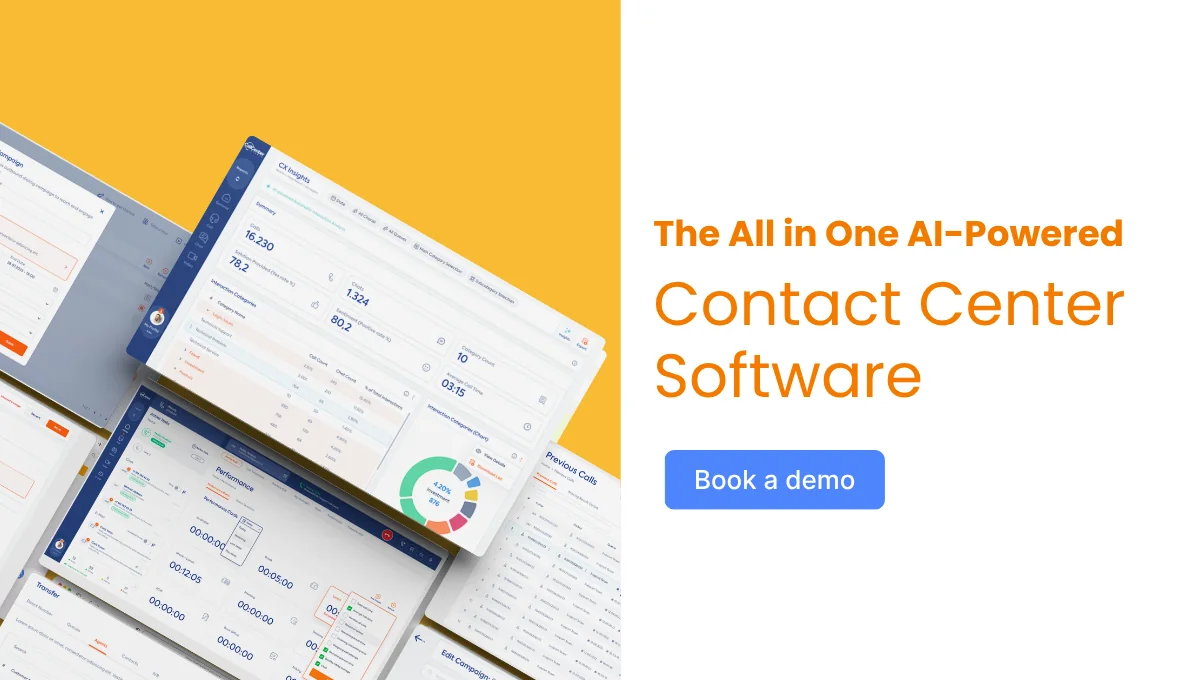
Call Center Studio is a pure cloud-native CCaaS platform built directly on Google Cloud Platform (GCP) microservices. It bridges the gap between traditional turnkey convenience and elastic financial models, making it one of the most uniquely scalable contact center solutions available.
- Estimated Aggregate Reviews (G2, Capterra, Software Advice): 1,000+ reviews across the combined digital ecosystem (including its international and parent branding, AloTech).
- Years in Business: 8 years (Launched globally in 2018).
- Country of Origin: United States (Global offices in Chicago, Istanbul, London, and Bucharest).
- Funding/Ownership: Venture Capital / Corporate Backed (Raised structured funding rounds to scale its global GCP architecture).
- Core Strength: An adjustable pay-as-you-go pricing model paired with a ready-to-use turnkey UI and highly accessible migration support.
What Users Love: The high responsive agility of their support team during migration. Seasonal operations (like e-commerce, food delivery, and logistics) benefit significantly from scaling up from 20 to 1,000+ agents without paying for idle licenses during slower months.
What Users Dislike: The administrator and reporting dashboards are functional but feel visually traditional compared to modern, sleek options. Users note that advanced multi-channel chat routing parameters can be rigid when handling complex, non-voice queues.
👉 See Call Center Studio User Rating and Full Customer Reviews.
8. Zoom Contact Center
Zoom expanded its widely adopted video architecture into a full suite, giving businesses an easy way to bundle internal corporate phones, enhance Customer Experience (CX), and deploy customer support queues.
- Estimated Aggregate Reviews (G2, Capterra, Software Advice): 400+ reviews (rapidly growing across mid-market aggregators).
- Years in Business: 4 years (The dedicated Contact Center product launched in 2022).
- Country of Origin: United States (Headquartered in San Jose, California).
- Funding/Ownership: Publicly Traded (NASDAQ: ZM).
- Core Strength: Seamless unified communications (UCaaS) and contact center (CCaaS) bundling with a strong focus on video-first support.
What Users Love: The absolute lack of agent training required. Since nearly every agent has used Zoom before, navigating the customer support interface feels natural from day one, offering seamless operational scalability.
What Users Dislike: Because the platform is relatively new compared to legacy systems, complex multi-tier routing logic, robust Interactive Voice Response (IVR) workflows, and advanced workforce analytics are still maturing.
The Verdict: Strategic Recommendation Matrix
The best platform is determined by matching your organization’s internal technical capabilities with your billing preferences. The table below outlines how these 8 platforms align across different business scales.
| Best For Small Business (1–49 Seats) | Best For Mid-Market (50–499 Seats) | Best For Enterprise (500+ Seats) | |
| Genesys Cloud CX | ❌ Too heavy; cost-prohibitive administrative overhead. | 🟡 Suitable if you have a dedicated IT team and require high stability. | ✓ Recommended Exceptional for deep omnichannel and complex routing logic. |
| NICE CXone | ❌ Highly discouraged; implementation scale is too heavy for small operations. | 🟡 Viable only if your business requires highly strict, specialized QA compliance. | ✓ Recommended The absolute industry gold standard for workforce management and deep analytics. |
| Call Center Studio | 🟡 Good fit if you want a turnkey app but want to avoid a rigid, fixed user subscription fee. | ✓ Recommended Highly recommended for seasonal or fast-growing businesses that want a usage-based cost model without needing developers to build the user interface. | 🟡 Highly capable alternative for enterprise operations looking to lower fixed licensing costs via a secure GCP architecture. |
| Five9 | ❌ Complex setup and minimum seat enforcement create friction. | ✓ Recommended Highly effective if your business runs heavy, blended outbound sales and support campaigns. | 🟡 Suitable alternative for traditional, high-volume inbound/outbound environments. |
| Talkdesk | 🟡 Acceptable, but you pay a premium for features you may not use yet. | ✓ Recommended Perfect balance of no-code speed and rich feature depth. | 🟡 Suitable, though it sometimes requires careful data structure planning for deep analytics. |
| Amazon Connect | ❌ Discouraged, unless your small startup is entirely composed of AWS developers. | 🟡 Viable if you have internal engineering resources and want to build a custom solution. | ✓ Recommended Highly efficient for engineering-led firms requiring pay-as-you-go financial elasticity. |
| Aircall | ✓ Recommended Rapid setup and immediate CRM integrations with zero IT overhead. | ❌ Likely to be outgrown if you require complex workforce management or advanced omnichannel routing. | ❌ Not engineered for massive enterprise multi-tier environments. |
| Zoom CC | ✓ Recommended Highly economical if your team is already running within the Zoom ecosystem. | 🟡 Reliable choice for unifying internal phone systems and customer queues on one network. | ❌ Multi-tier enterprise routing logic is still maturing. |
| GNS | Five9 | NICE | AWS | CCS | TalkD | AirCall | Zoom | |
|---|---|---|---|---|---|---|---|---|
| Platform Architecture | Micro services | Blended | Enterprise Suite | API First | GCP Native | Low- Code | Turnkey App | UC Native |
| Billing Model | Fixed Seat | Fixed Seat | Fixed Seat | Pay-as- you-go | Pay-as- you-go | Fixed Seat | Flat / User | Flat / User |
| No Developer Required | ❌ | ❌ | ❌ | ❌ | ✓ | ✓ | ✓ | ✓ |
| 1-Click CRM Sync | 🟡 | 🟡 | ❌ | ❌ | ✓ | ✓ | ✓ | ✓ |
| Native Deep WFM | ✓ | ✓ | ✓ | 🟡 | ❌ | 🟡 | ❌ | ❌ |
| Advanced Outbound Dialer | ✓ | ✓ | ✓ | 🟡 | ✓ | 🟡 | ❌ | ❌ |
| Zero Initial Seat Commit | ❌ | ❌ | ❌ | ✓ | ✓ | ❌ | ✓ | ✓ |
| Fits Small (1–49) | ❌ | ❌ | ❌ | ❌ | ✓ | 🟡 | ✓ | ✓ |
| Fits Medium (50–499) | 🟡 | ✓ | 🟡 | 🟡 | ✓ | ✓ | ❌ | 🟡 |
| Fits Enterprise (500+) | ✓ | 🟡 | ✓ | ✓ | 🟡 | 🟡 | ❌ | ❌ |
- ✓ = Supported natively out-of-the-box / Ideal fit.
- ❌ = Not supported natively / Heavy friction / Highly discouraged.
- 🟡 = Partially supported / Moderate fit (Requires setup, add-on costs, or technical patience).
Summary and Structural Takeaways From The Matrix
- The Consumption Bloc (Amazon Connect vs. Call Center Studio)
If you isolate the row for “Zero Initial Seat Commit,” only Amazon Connect, Call Center Studio, and the low-end SMB tools (Aircall/Zoom) pass. However, when you cross-reference that with “No Developer Required,” Amazon Connect drops out.
This leaves Call Center Studio as the primary alternative among modern CCaaS platforms that provides true pay-as-you-go pricing and financial scalability without requiring a dedicated team of software engineers to build the workspace from scratch.
- The Enterprise Heavyweights (Genesys vs. NICE CXone)
These platforms dominate the enterprise metrics, native Workforce Management (WFM), and comprehensive omnichannel contact center capabilities. Their structural trade-off is completely visible on the “No Developer Required” and “1-Click CRM Sync” rows—meaning their deep processing power and highly stable architectures require dedicated, certified technical resources to deploy, maintain, and manage over time.
Keep in mind that for mid-market players like Five9 and Talkdesk, deep WFM features absolutely exist but are typically locked behind their highest premium license tiers.
- The Turnkey Specialists (Aircall & Zoom)
They sweep the ease-of-use rows (✓ for No Developer and 1-Click Sync), making them strong contenders for businesses looking for the best contact center software with near-zero setup times.
However, they feature definitive hard limits on high-volume outbound campaigns and advanced workforce forecasting algorithms, meaning fast-growing companies might eventually face restrictions on long-term technical scalability.
Next Steps for Your Enterprise
As you review this contact center software comparison, remember that the best solution is one where you only pay for what you actually use. Don’t let rigid licensing tiers dictate your growth boundaries.
💬 Let’s talk scale.
Contact our solution experts now to calculate your potential savings and build a tailored cloud roadmap for your team.