
AWS and Forrester research show that migrating to a modern CCaaS (Contact Center as a Service) platform can slash operational costs by up to 35%.
That is the obvious prize. The hidden trap, however, is execution:
- nearly 70% of enterprise digital and cloud migrations fail due to legacy system integration friction.
In this guide, we will present an enterprise CCaaS migration framework to address this technical gap. It provides CEOs, CTOs, CFOs, and VPs of Customer Operations with a comprehensive procurement strategy and contact center TCO calculator.
This guide delivers a cloud-native architectural blueprint for evaluating, budgeting, deploying, and validating a next-generation omnichannel routing ecosystem.
A downloadable procurement checklist and executive summary are available at the end of this guide for your convenience. Be sure to download it before you go to avoid common vendor lock-in pitfalls and master your cloud transition.
1. The Catalyst: Why Legacy Contact Centers Fail in 2026
For years, enterprises migrated to the cloud using the “lift-and-shift” method. They took legacy software configurations and hosted them inside virtual machines within public cloud centers.
In 2026, this approach is no longer viable. These architectures cannot handle the modern reality of non-linear customer journeys, where a customer might jump from an AI voice bot to WhatsApp, then to a live video call, while demanding real-time data sync and continuity.
Moreover, monolithic cloud architectures suffer from structural state-synchronization delays. When a high volume of concurrent interactions hits a system built on virtualized server instances, the middleware layer must spin up new VM instances to cope. This minutes-long process results in:
- Dropped WebSockets.
- Delayed screen pops for agents.
- Split-brain scenarios where customer chat histories fail to sync across separate databases.
Digital Ingestion & The Multi-Modal Customer
Modern customer interactions require advanced omnichannel routing because they are asynchronous and multi-modal. A single customer journey might involve:
- An initial interaction with an automated web agent.
- A shift to an asynchronous messaging channel like Apple Business Chat or WhatsApp while waiting for resolution.
- An escalation to a live human voice channel, requiring the platform to stream live sentiment data to a supervisor’s dashboard.
Legacy systems treat these channels as distinct, disconnected applications linked by brittle custom APIs. This creates data silos. If your infrastructure requires separate databases or specialized processing engines for voice and digital interaction states, your enterprise cannot maintain a continuous customer context. And sooner or later, this gap leads to higher Average Handling Time (AHT) and poor customer satisfaction.
Changing Compliance Frameworks
Compliance requirements have become much stricter globally. Regulatory frameworks like GDPR, HIPAA, and evolving localized financial data sovereignty laws now mandate strict controls on data processing.
On-premise deployments struggle to keep up with these fast-changing rules, while generic cloud platforms often lack fine-grained, localized data control. Enterprises now require platforms with built-in regional data boundaries, zero-trust access controls, and automated compliance auditing integrated directly into the communication pipeline.
2. Strategic Boundaries: When is Cloud Transition Premature?
While cloud migration is a dominant trend, a transition to CCaaS is not universally viable for every enterprise configuration. There are specific structural, operational, and regulatory scenarios where moving to a public cloud contact center can introduce significant operational risk.
The Monolithic Legacy Dependency Trap
Enterprises running core backend infrastructure on deeply customized, on-premise systems—such as legacy mainframe banking systems or highly modified ERP systems—must approach cloud migration carefully.
If your customer data cannot be modernized or moved to the cloud, setting up a cloud-based communication front-end creates a split architecture. Every single interaction routing decision, IVR data dip, or screen pop request must travel from the cloud platform to your on-premise data center over private lines or VPNs.
This split architecture introduces network latency. A data dip that takes 5 milliseconds on-premise can jump to 200–300 milliseconds when crossing a hybrid cloud boundary. Across millions of annual interactions, this extra latency:
- Extends customer wait times,
- Causes noticeable voice delays in routing,
- Increases Average Handling Time (AHT), and
- Degrades the overall customer experience.
Sovereign Data and Strict Legal Jurisdictions
In countries with strict data sovereignty laws, processing citizens’ personal identifiable information (PII) on cloud servers located outside national borders is illegal.
If a CCaaS vendor does not have a local data center infrastructure within your legal jurisdiction, or cannot guarantee that call recordings, transcripts, and customer profiles remain strictly within national boundaries, moving to the cloud creates serious regulatory and compliance risks.
The Stable-Volume Financial Realignment
The financial benefit of cloud infrastructure relies heavily on elasticity—the ability to scale resources up and down to match changing demand. Consider an enterprise with stable call volumes, zero seasonal traffic spikes, no plans for rapid geographical expansion, and fully depreciated on-premise hardware.
In this scenario, moving to a cloud-based operational expenditure (OpEx) model can actually increase total baseline infrastructure costs. If your hardware is paid for and your operational costs are predictable, the premium fee charged by cloud vendors for elasticity brings little practical value.
If your enterprise does not fall into one of these structural edge cases, moving forward with a cloud transition is definitely the most profitable financial and operational decision you can make. As you move into this transformation, here is how you must diagnose your internal readiness:
3. Enterprise Self-Diagnosis & Operational Maturity Models
Before evaluating external CCaaS vendors, an enterprise must audit its own operational readiness and technical complexity. Selecting a platform without determining your specific maturity tier can lead to over-engineering or buying a system you outgrow within twelve months.
Tier 1: Standardized Operations
- Operational Indicators: Core focus on voice channels with emerging digital channels; static Interactive Voice Response (IVR) structures; manual agent scheduling; disconnected customer records across systems.
- Technical Bottlenecks: Relies on hardware-dependent SIP trunks or basic cloud routing; basic report exports with no real-time data streaming; software updates require scheduled downtime windows.
- Target State Realization: Needs a reliable, easy-to-configure cloud platform that unifies voice and basic messaging channels under a single interface without heavy engineering overhead.
Tier 2: Orchestrated Omnichannel
- Operational Indicators: Full omnichannel engagement across voice, SMS, email, and social apps; dynamic routing based on CRM data; automated customer feedback collection; synchronized agent desktop environments.
- Technical Bottlenecks: Relying on custom code or complex middleware to link the contact center to CRMs like Salesforce or HubSpot; dealing with data sync delays between communication channels and systems of record; hit by rising costs from software maintenance and API integrations.
- Target State Realization: Requires an open API-first platform with pre-built CRM integrations, flexible developer tools, and scalable event-driven data streaming pipelines.
Tier 3: Autonomous & Intelligent
- Operational Indicators: AI orchestration driving primary customer interactions; live agent coaching via natural language processing; dynamic workforce management using predictive modeling; real-time customer sentiment routing.
- Technical Bottlenecks: System latency when calling multiple AI engines mid-interaction; high infrastructure costs from processing high-volume data streams; restricted by rigid commercial licensing that charges premium rates for advanced features.
- Target State Realization: Requires a serverless architecture with built-in AI orchestration capabilities, distributed edge compute processing, and a consumption-based pricing model.
On top of that, you need to locate your operational bottlenecks before diving into vendor evaluation. Hand your engineering and operations teams these four diagnostic questions to answer:
- The Core Data Sync Test: When a customer switches from a web chat session to an inbound phone call, how long does it take for the complete chat transcript to appear on the agent’s screen? (If it takes more than 500 milliseconds, or requires a manual search across different applications, your platform lacks a unified data layer).
- The Traffic Surge Test: If inbound traffic spikes by 400% in under two minutes due to an external event, how does the system respond? (If it requires manual server provisioning or returns busy signals to users, it is built on a hosted VM model rather than true serverless architecture).
- The Workflow Change Test: How long does it take to update an IVR flow, add an automated WhatsApp auto-responder, and deploy those changes to production? (If it requires a developer ticket, a software deployment window, or a third-party consultant, your platform lacks a modern, low-code visual workflow builder).
- The Integration Cost Test: What percentage of your contact center budget is spent on maintaining custom middleware and paying for third-party API connectivity? (If this cost is rising faster than your seat licensing fees, your platform’s API model is inefficient for enterprise operations).
Now that you know your tier, technical, and operational bottlenecks, use the matrix below to map your procurement strategy and identify vendor lock-in red flags to avoid:
| Your Assessed Tier | Recommended Procurement Strategy | What to Look For in RFP | What to Red-Flag / Avoid |
| If You Are Tier 1 (Moving to Tier 2) | Focus on Time-to-Value and Operational Consolidation. Do not buy advanced AI suites yet. | Out-of-the-box CRM integrations, native voice + digital channel consolidation, visual drag-and-drop IVR builders. | Vendors requiring specialized software developers for basic call routing changes or charging massive setup fees. |
| If You Are Tier 2 (Moving to Tier 3) | Focus on Architecture & Data Velocity. Your priority is breaking custom middleware dependencies. | Open APIs (REST/GraphQL), real-time event-driven webhooks, Bring Your Own Carrier (BYOC) SIP routing support. | Platforms with closed ecosystems, rigid database formats, or sub-par documentation that forces vendor lock-in. |
| If You Are Tier 3 (Staying at Elite Level) | Focus on Infrastructure Elasticity & AI Orchestration Frameworks. | True serverless architecture backend (AWS Lambda / micro-containers style processing), dynamic usage-based pricing. | Fixed-seat software licensing models that penalize seasonal peaks, and systems with >100ms API data dip delays. |
4. Structural Evaluation: Auditing Legacy vs. Next-Gen Infrastructure
Your first step in navigating this market is to cut through vendor marketing and audit what is actually running under the hood. This requires drawing a clear contrast between platforms that merely host legacy software in the cloud and those natively engineered for modern, serverless execution.
Use the evaluation matrix below to compare candidates, carefully auditing their native capabilities against their technical limitations.
| Evaluation Metric | Legacy & Hosted Cloud Platforms | Next-Generation Serverless CCaaS |
| Scalability & Provisioning | 🔴 Manual Intervention Required
Prone to latency spikes during sudden traffic surges. |
🟢 Autonomous Elasticity
Immediate resource scaling with zero operational downtime. |
| Deployment & Agility | 🔴 Long Onboarding Cycles
Complex configurations and restrictive software upgrades. |
🟢 Rapid Low-Code Timelines
Tailored for continuous iteration and immediate deployment. |
| Data Layer Integration | 🔴 Siloed Multi-Channel Environments
Requires fragile, third-party middleware to sync databases. |
🟢 Unified Data Orchestration
Open APIs and event-driven pipelines for real-time cross-channel context. |
5. Financial Engineering: Decoding Total Cost of Ownership (TCO)
The true cost of an enterprise contact center platform extends far beyond the upfront monthly license fee. While per-seat software pricing is highly visible, vendors frequently obscure long-term expenses within complex telecom agreements, usage fees, and professional services retainers.
Conducting an accurate Total Cost of Ownership (TCO) analysis requires mapping these costs across a multi-year horizon. To calculate your true contact center TCO, you must evaluate the following cost categories:
- Software Licensing Options: Evaluate subscription models carefully. Look out for rigid, tiered plans that force you to buy unused features versus dynamic, modular licensing that lets you pay only for active tools.
- Telecom and SIP Costs: Check if the vendor requires you to use their bundled telecom services at premium rates, or if they offer Bring Your Own Carrier (BYOC) choices via open SIP trunking. Watch out for hidden costs like asymmetric billing intervals or extra fees for high-volume concurrent calls.
- Custom API Development & Maintenance: Calculate the developer hours needed to build and support custom integrations. If a platform uses rigid, poorly documented SOAP or REST APIs, expect your engineering maintenance costs to climb over time.
- Over-Provisioning Protections: Traditional seat-licensing forces enterprises to buy capacity for peak seasonal volume, meaning you pay for idle software during slower periods. True consumption-based pricing models charge only for active session minutes, turning fixed licensing costs into a flexible, volume-matched expense.
The Three-Year TCO Calculation Framework
| Cost Category | Year 1: Implementation | Year 2: Operation | Year 3: Optimization |
| Core Software Fees | Base licenses + user setup fees | Recurring subscription fees | Adjusted license volume fees |
| Telecom / SIP Routing | Number provisioning + trunk configuration | Inbound/outbound minute usage | Global toll-free/local routing spend |
| Professional Services | Initial setup, data migration, CRM syncing | Custom flow changes, update cycles | Platform tuning and expansion |
| Internal Engineering | Developer hours for workflow creation | API maintenance and security updates | Adding new channels/tools |
| Compliance & Auditing | Data sovereignty setups, security testing | Regular compliance audits | Multi-region system expansions |
| TOTAL PROJECTED COST | $Y1_Total | $Y2_Total | $Y3_Total |
6. Stakeholder Alignment: Building Internal Consensus
A successful enterprise platform procurement requires backing from the entire leadership team. Each stakeholder views the contact center through a different professional lens. Your internal business case must address their specific priorities and goals.
| Executive Role | Primary Strategic Focus | Key Architectural Demands |
| CEO | Market Agility & Brand Protection | Rapid innovation deployment, customer lifetime value expansion, risk minimization. |
| CTO | Architecture, Security & Governance | Zero-downtime scalability, API integration flexibility, native IAM integration, low code debt. |
| CFO | Capital Efficiency & TCO Predictability | CapEx to OpEx conversion, elimination of idle capacity waste, high ROI visibility. |
| COO | Operational Excellence & Performance | Lower agent attrition, optimized First Contact Resolution (FCR), single-pane operational simplicity. |
7. The Procurement Blueprint: A Targeted C-Suite Audit Checklist
Use this structured technical checklist during vendor evaluation meetings to cut through marketing rhetoric and protect your enterprise from operational risk.
1. Technical Scalability & Architecture
You need flexible cloud technologies that prevent system crashes during sudden traffic spikes and ensure customer conversations never disappear when moving between channels.
- [ ] Does the infrastructure run on a true serverless architecture that scales instantly, or does it depend on virtualized instances that require manual configuration?
- [ ] Can the platform guarantee real-time data sync across all voice and digital channels without message or state loss?
- [ ] What is the exact service availability guarantee (SLA) for the platform’s core infrastructure, and what are the financial penalties if they fail to meet it?
- Essential Tech Stack: Auto-scaling serverless engines to handle unannounced traffic spikes, instant data synchronization protocols to prevent dropped chat messages, and event-driven pipelines that keep customer records updated across all channels simultaneously.
2. Risk Mitigation & Compliance
In plain terms, you are looking for military-grade encryption to protect your enterprise from heavy regulatory fines, paired with automated AI tools that immediately track customer sentiment.
- [ ] Does the system feature granular, role-based access controls (RBAC) alongside native data encryption that complies with GDPR, HIPAA, and local data standards?
- [ ] Are quality management features, like live automated sentiment analysis and real-time supervisor whisper coaching, built directly into the core platform?
- [ ] Can the system redact sensitive data (such as credit card numbers or personal IDs) from voice recordings and text transcripts automatically?
- Essential Tech Stack: Military-grade data encryption to secure sensitive customer information, AI-powered sentiment analysis for automated conversation quality checks, and centralized identity management to control internal data access levels.
3. Commercial Alignment
You want management tools that eliminate hidden costs, connect seamlessly with your current CRM without heavy development fees, and keep your team independent of expensive software coders.
- [ ] Does the vendor demand long-term, rigid user volume commitments, or do they offer a flexible, consumption-based pricing model?
- [ ] Are all platform configuration features, developer APIs, and data extractions included in the base licensing costs, or do they require premium tier upgrades?
- [ ] Can your internal teams modify IVR flows, add communication channels, and adjust routing rules using visual, low-code tools without paying for external professional services?
- Essential Tech Stack: Plug-and-play open APIs to connect easily with your existing CRM without heavy development costs, real-time resource tracking dashboards to monitor exactly what you pay for, and drag-and-drop workflow builders that allow your team to change call flows easily.
8. Business Case & ROI Framework: Measuring Real Impact
Moving away from legacy infrastructure eliminates major capital expenditures (CapEx), such as buying local servers and paying for upfront software licensing. By shifting these outlays into a predictable, usage-based model (OpEx), you free up cash flow for core growth initiatives.
To translate this capital shift into an unassailable business case for your board of directors, you must back your strategic vision with hard, audited projections.
At this stage of your procurement journey, you should use the following ROI metric formulas to build your financial baseline. By calculatedly mapping your current operational inefficiencies against next-generation performance benchmarks, these KPIs serve as your primary tool to justify the migration cost, demonstrate immediate time-to-value, and secure explicit budget sign-off from the CFO.
Average Handling Time (AHT) Optimization
- The Mechanism: A unified database architecture provides automated data pops, putting the entire customer history onto an agent’s screen before they even say hello. This removes the need for agents to toggle between separate software systems or ask customers to repeat information.
- The ROI Calculation: Use this KPI to quantify the direct labor hours clawed back by platform efficiency. Calculate your total savings by multiplying your reduction in AHT (in minutes) by your total annual interaction volume, then multiplying that figure by your average blended cost per agent minute.
- AHT Reduction Formula:
(Current AHT – New AHT) * (Annual Volume) * (Cost per Minute)
First Contact Resolution (FCR) Expansion
- The Mechanism: Real-time omnichannel routing engines match customers with the exact right agent based on their specific situation, past interaction history, and current sentiment analysis data.
- The ROI Calculation: Use this metric to demonstrate the compounding cost-savings of eliminating repeat work. Track your projected increase in FCR against your average cost per escalated ticket or follow-up call. Every 1% improvement in your FCR rate removes thousands of repeat interactions from your queue, directly lowering your total operating costs.
- FCR Financials Formula:
(Target FCR – Current FCR) * (Cost Per Escalation)
Reducing Employee Turnover Expenses
- The Mechanism: Replacing a cluttered, frustrating desktop setup with a single, clear user workspace reduces agent stress and burnout.
- The ROI Calculation: Use this projection to prove how modern infrastructure mitigates hidden HR costs. Measure your targeted reduction in employee turnover against your internal costs for recruiting, hiring, and training new agents. Lower attrition rates save your human resources department significant money and preserve institutional knowledge.
9. Strategic Conclusion: Securing Sustainable Agility
Selecting an enterprise cloud contact center platform is a long-term commitment to business agility. Legacy systems that create internal data silos, slow down feature deployments, and lock you into rigid pricing models are no longer viable for companies aiming to lead their industries.
Enterprise leaders must prioritize modern communication frameworks designed for deep system integration, continuous uptime, and fully transparent cost structures. Securing a sustainable competitive advantage requires choosing an infrastructure capable of evolving alongside global market demands.
From Monoliths to Microservices: A Contact Center Revolution
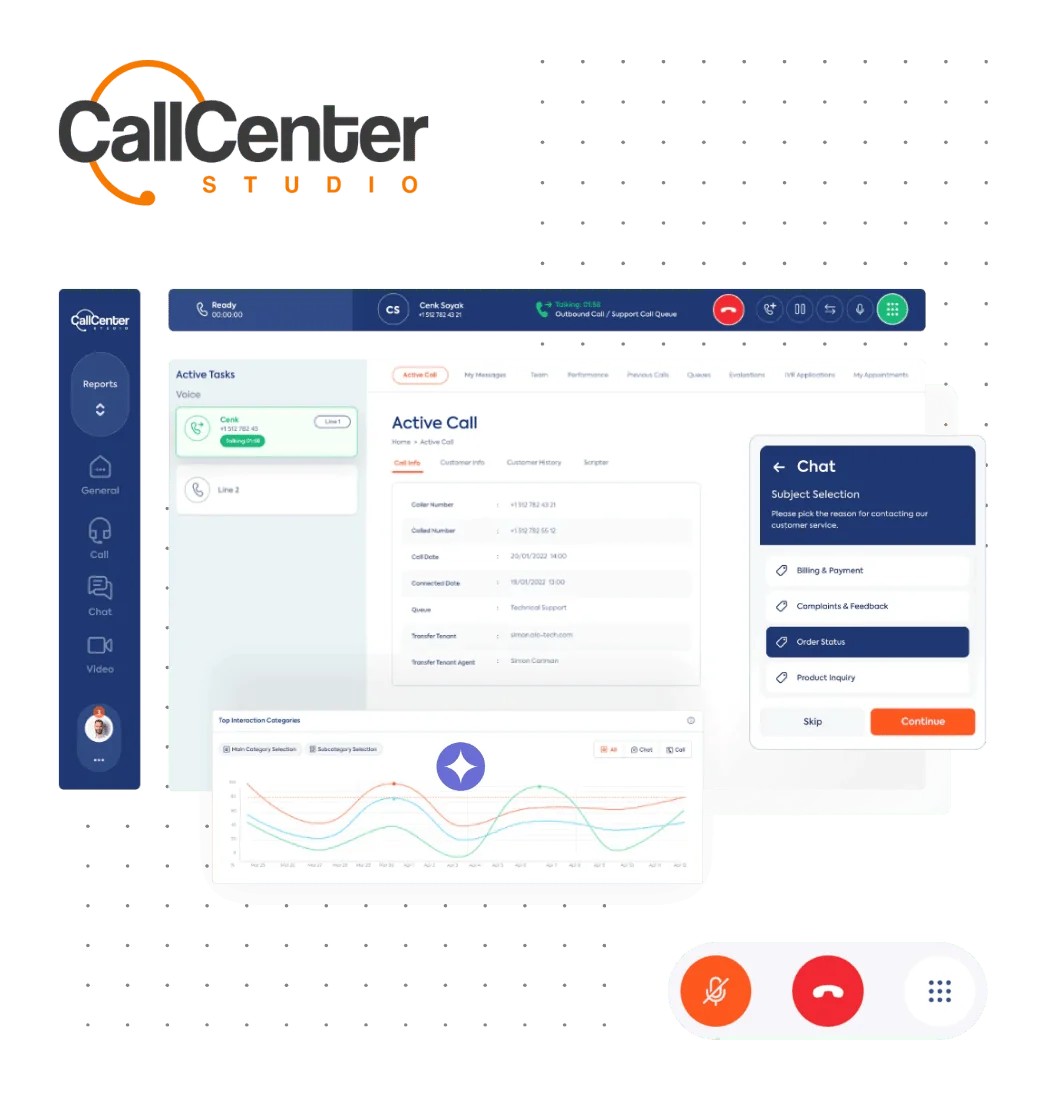
Call Center Studio delivers the world’s first serverless, microservices-engineered CCaaS platform—built to eliminate legacy friction and drive massive scalability.
See how global leaders turn infrastructure theory into quantified business value. In our deep-dive case study, eBay’s subsidiary migrated to Call Center Studio and integrated with Salesforce, unlocking:
- 330% Operations Growth: Scaled effortlessly from 70 to 305 agents without infrastructure overhead.
- 200% ROI Increase: Doubled business operations revenue through native CRM orchestration.
- 1.5 Minutes Saved per Call: Slashed average handling time (AHT) during peak periods, freeing up critical agent capacity.
Stop guessing your infrastructure needs. Read the eBay Subsidiary Full Case Study or explore more transformations at Call Center Studio Success Stories.
Download the Print-Ready Executive Bundle
Take this 2026 CCaaS Buyer’s Guide Package to your next board meeting. This resource bundles the following into a single document to help your team audit vendors and secure explicit budget sign-off:
- Executive Summary
- Key Takeaway Cheat Sheet
- C-Suite Action Checklist
👉 Download the Executive Summary & Procurement Checklist PDF