

When companies expand their footprints across continents they often encounter a “patchwork” problem: a fragmented infrastructure where each regional office operates on different legacy systems, disparate data silos, and inconsistent workflows.
Managing multi-region contact center operations through a fragmented approach is a significant barrier to maintaining a unified brand identity and a high standard of CX. That is why today’s leaders are increasingly turning toward a unified contact center platform.
Let’s dive into the details.
The Complexity of Global Scale: Why Fragmented Systems Fail
Expanding a contact center globally brings a unique set of logistical and technical hurdles. Without a unified contact center platform, managers face several critical challenges such as:
- Performance Invisibility: When regions use different reporting tools, getting a “helicopter view” of global performance becomes a manual, error-prone task of stitching spreadsheets together.
- Time Zone and Language Barriers: Coordinating shifts and ensuring that a customer in Paris receives the same quality of support as a customer in Tokyo requires sophisticated time zone management and language-based routing.
- Compliance Fragmentation: Different regions come with different rules—GDPR in Europe, HIPAA in the US healthcare sector, or local data residency laws. Managing these in silos increases the risk of costly breaches.
- Operational Silos: Lessons learned in one region often fail to reach another because the data and coaching methodologies aren’t integrated.
Now, let’s see what a single tech stack brings to the table for the global contact center.
1. Centralized Control with Local Flexibility
The primary advantage of a single tech stack is the ability to manage the entire global operation from a single dashboard. Besides, centralized contact center management does not mean a “one-size-fits-all” approach; rather, it provides the framework for local teams to excel.
With cloud-native architecture, a manager in New York can oversee queues in Istanbul or London in real-time. This visibility allows for “follow-the-sun” support models, where queries are automatically routed to active regions as others go offline, ensuring 24/7 availability without overstaffing.
This type of control is a key phase in a smooth cloud contact center migration, allowing businesses to transition from localized chaos to global harmony.

2. Smart Regional Call Routing and Queue Management
A scalable contact center must be intelligent enough to know where a customer is calling from and what they need. Regional call routing ensures that:
Language Pairing: Customers are automatically connected to agents who speak their native tongue.
Skill-Based Allocation: If a high-value customer in a specific region needs assistance, the system uses predictive routing to find the best-fit agent globally, not just the one in the nearest building.
Reduced Latency: Cloud-based platforms utilize global points of presence to ensure voice quality remains crystal clear, regardless of the distance between the agent and the caller.
By using intelligent routing, similar to how healthcare providers manage complex patient journeys, global enterprises can ensure that every caller feels like a priority, not just a number in a queue.
3. Unified Real-Time Analytics and Reporting
Data is the lifeblood of a successful multi-region contact center. When operating on a single stack, real-time analytics becomes a universal language. Instead of waiting for weekly regional reports, managers can view live spikes in volume or drops in CSAT across all territories simultaneously.
This unified data allows for:
- Standardized KPIs: Compare Average Handle Time (AHT) or First Response Time (FRT) across regions using the same metrics and definitions.
- Instant Intervention: Just as a sports coach uses “instant replay,” managers can monitor live interactions across regions.
- Data-Driven Coaching: Managers can use advanced reporting tools to identify if a specific region needs more training on a particular product or if a certain language queue is underperforming.
4. Overcoming the Compliance and Security Hurdle
Operating globally means navigating a minefield of regulations. By using the cloud-native single tech stack, you rely on one enterprise-grade platform that ensures data encryption and secure access policies are applied consistently across the globe.
The “security-first” architecture acts as the foundation of trust, which is essential for modern global CX operations.
Success Story: Call Center Studio’s security-first approach was a deciding factor for institutions like the Florence Nightingale Hospital, which required a platform that could handle sensitive data while scaling across multiple departments and regions.
In addition to keeping their operation secure, by using Call Center Studio AI-powered Integration, they saw:
- 32% increase in sales success, and
- 46% decrease in waiting time
5. Seamless Integration and Agent Experience
A unified stack simplifies the “agent desktop.”
Whether an agent is in a hub or working remotely in a different country, they access the same CRM integrations, ticketing tools, and AI-assisted features.
When systems are integrated into one platform, agents don’t waste time switching between tabs. This is particularly vital during high-pressure events like Black Friday. When all your teams have access to unified AI chatbots and forecasting tools, that makes the successful sale real.
Strategy for a Smooth Transition to a Unified Stack
If your organization is currently burdened by legacy regional systems, the move to a unified contact center platform should be a phased approach:
- Needs Assessment: Map out regional workflows and identify pain points where time or customers are being lost.
- Infrastructure Prep: Confirm bandwidth and security protocols meet the requirements for a global cloud rollout.
- Data Consolidation: Move customer records and historical performance data into the unified system carefully to maintain integrity.
- Global Training: Use sandbox environments to train agents across different regions consistently on the new unified dashboard.
Take the Next Step
Are you ready to eliminate the complexity of your multi-region operations?
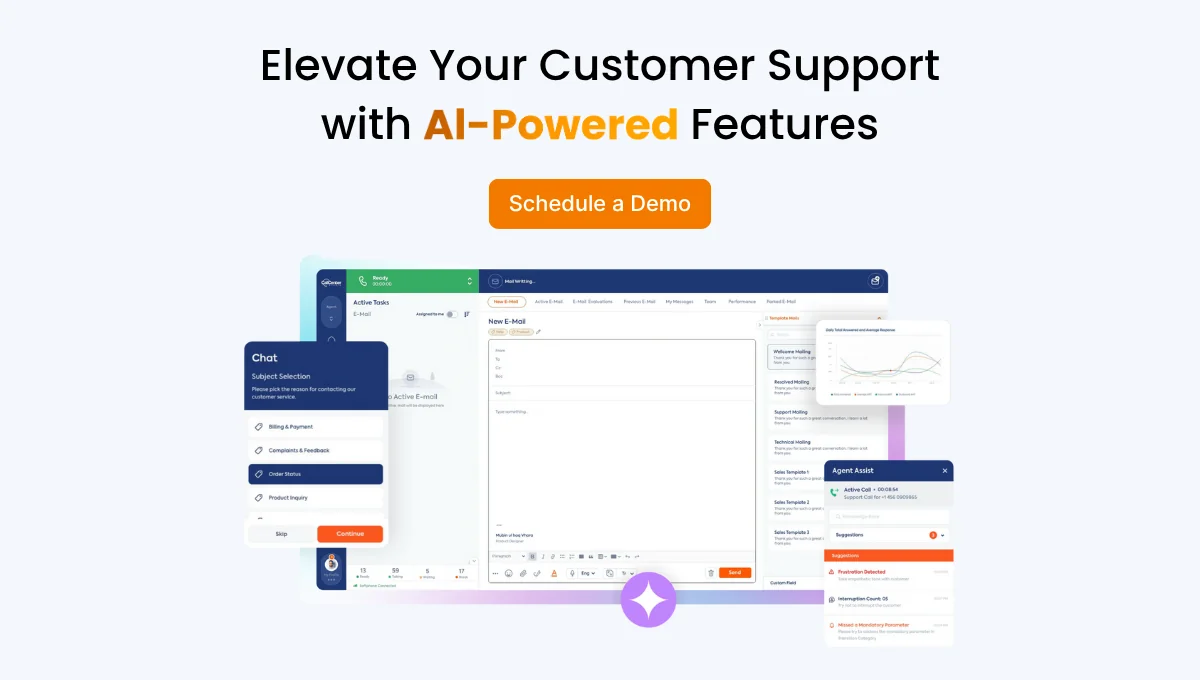
Schedule a personalized walkthrough today to see how our unified cloud platform can transform your global CX operations.