
In Southeast Asia (SEA), the green WhatsApp icon isn’t just for texting, it has become the primary dialer for over 2.5 billion users globally, with a massive, highly concentrated adoption rate across the ASEAN region.
For businesses, this shift represents an “adapt or get left behind” moment. We are witnessing the rise of WhatsApp calls in Southeast Asia as the new gold standard for voice communication.
But why now? And more importantly, how can your contact center stay ahead of this wave?
The Mobile-First Revolution in Southeast Asia
Southeast Asia didn’t follow the Western path of digital evolution. Many countries in this region skipped the “desktop era” entirely and went straight to mobile. This created a unique consumer behavior where the smartphone is the entire digital ecosystem.
In Indonesia, recent data shows that nearly 87% of consumers prefer messaging as their primary way of communicating with businesses. However, as issues become more complex, messaging alone isn’t enough. Customers want to talk, but they don’t want to leave the app they are already in. This is where the WhatsApp Call feature changes the game.
Breaking the “App-Switching” Friction
Imagine a customer in Vietnam browsing an e-commerce site via a WhatsApp chat. They have a complex question about a refund policy. In the old days, they’d have to:
- Close WhatsApp.
- Open their phone dialer.
- Manually type in a long business number.
- Wait in a traditional PSTN queue.
Today, with customer-initiated WhatsApp calls, that same customer simply taps the “Call” icon at the top of their chat window. No switching apps, no cost for international roaming, and no friction. It is a faster, more natural communication experience that feels like calling a friend.

Why Businesses are Making the Switch
The shift toward WhatsApp Business voice is a must for a contact center. Because management of the traditional phone lines is expensive and often siloed from digital data.
1. Unified Communication, Simplified Management
The biggest challenge for modern CX managers is “channel fragmentation.” You have a team for chat, a team for social media, and a team for voice. This creates a disjointed experience.
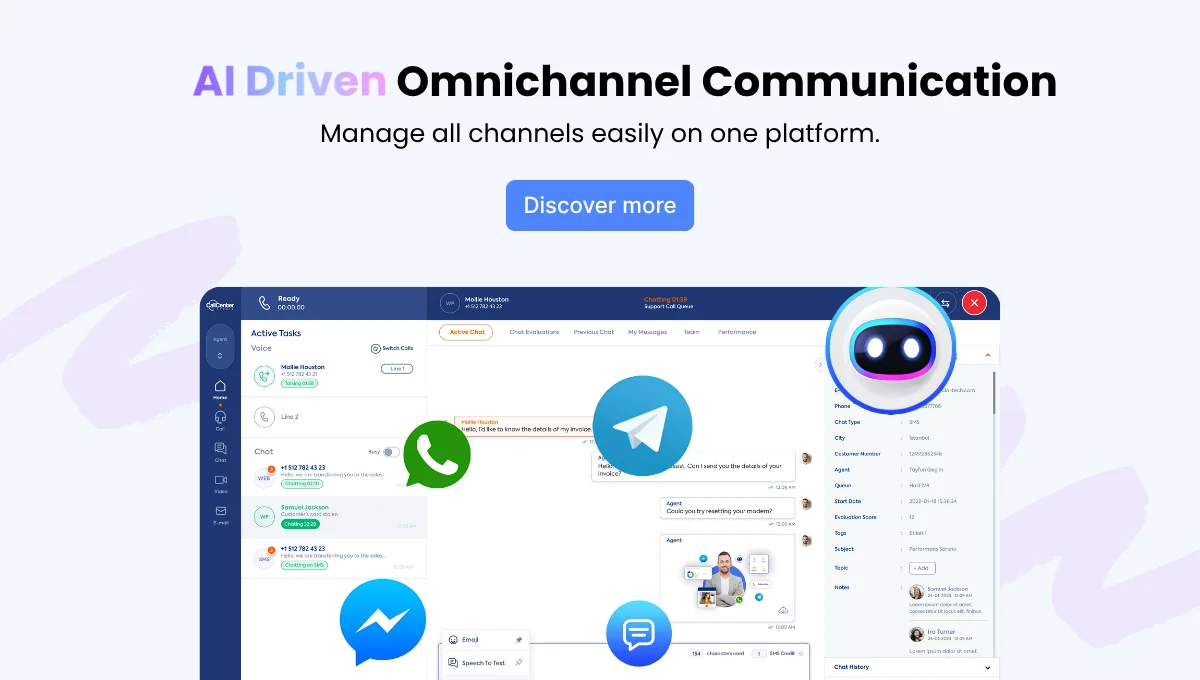
By using a unified communication platform like Call Center Studio, you can merge these worlds. A WhatsApp call isn’t treated as a “separate thing”; it flows into the same omnichannel queue as your web chats and traditional calls.
2. Personalized IVR for WhatsApp Calls
One of the most exciting technical developments in 2026 is the ability to run an IVR for WhatsApp calls. Just like a traditional phone system, you can greet your WhatsApp callers with a professional menu.
- “Press 1 for English, 2 for Bahasa Indonesia.”
- “Press 3 to speak with a travel consultant.”
This ensures that even though the call is coming through an app, the professional standard of your business remains top-tier.
3. Smart Routing and Queue Management
In a busy cloud contact center in Southeast Asia, you can’t afford to have calls bouncing around. Call routing and queue management for WhatsApp calls allow you to direct high-value customers to your best agents instantly. Since the call is tied to their WhatsApp profile, your system can recognize them before an agent even picks up.
The Technical Edge: How Call Center Studio Delivers
At Call Center Studio, we’ve seen that simply “having” a WhatsApp number isn’t enough. You need the enterprise-grade tools to back it up. Our integration of the WhatsApp Business API allows for a level of depth that a standard smartphone simply can’t provide.
WebRTC and High-Quality Audio
Traditional phone lines in rural parts of SEA can be unreliable. Since WhatsApp calls use VoIP (Voice over Internet Protocol) and leverage advanced audio codecs, the call quality is often superior to traditional PSTN lines. Our platform uses WebRTC technology to ensure that the audio between the customer’s app and the agent’s headset is crystal clear, regardless of distance.
Real-Time Analytics and Recording
If you can’t measure it, you can’t improve it. Unlike personal WhatsApp calls, calls handled through our omnichannel contact center platform are fully recorded and logged. Managers can see:
- Average Handle Time (AHT) for WhatsApp-specific calls.
- Customer Sentiment during the call.
- First Contact Resolution (FCR) rates.
This data provides the CX Insights needed to refine your strategy in the competitive SEA market.
The Road Ahead: Scalable Voice Experiences
As we move further into 2026, the distinction between “messaging” and “calling” will continue to blur. Customers in Southeast Asia are leading the world in this “conversational everything” movement. They expect a seamless transition from a text-based bot to a live voice agent without having to explain their problem twice.
By adopting a cloud contact center Southeast Asia strategy that prioritizes WhatsApp, you are doing more than just adding a channel. You are meeting your customers where they live. You are reducing their effort, increasing your agents’ efficiency, and building a sustainable CX model.
Checklist for Your WhatsApp Voice Strategy:
- [ ] Verify your WhatsApp Business API: Ensure you have the green checkmark for maximum trust.
- [ ] Integrate with your CRM: Make sure agent screens “pop” with customer info when a WhatsApp call hits the queue.
- [ ] Design a Custom IVR: Don’t just let the phone ring; guide your customers to the right department.
- [ ] Train Your Agents: Ensure they know how to transition smoothly from a chat to a voice call within the same thread.
The “New Voice Standard” has already arrived. In a region where WhatsApp is the oxygen of digital life, providing a direct, high-quality voice connection through the app is the smartest move a CX leader can make.
With Call Center Studio WhatsApp Solution, you can turn this trend into your competitive advantage.