

For years, sentiment analysis was treated like a binary choice between “Good” and “Bad.” But human emotion is a spectrum, not a switch.
When a customer sends a message saying, “Your latest update is… interesting,” a basic algorithm might tag it as “Positive” because of the word “interesting.” However, anyone with a bit of social intuition knows that “interesting” is often the polite cousin of “disaster.”
In this article, we will discuss how to use sentiment analysis to take the right action for your customer experience.
Categorizing Emotions: The Why Behind the Emoji
To manage a crowd, you first need to categorize it. In the world of customer emotion data, we typically look at four primary states, each requiring a different strategic response:
- The Glowing Star (Happy/Promoter): These are your advocates. However, “Happy” isn’t the finish line. It’s an opportunity. Sentiment analysis identifies these peaks of joy, allowing marketing teams to trigger referral programs or request testimonials at the exact moment the customer is feeling the “glow.”
- The Grey Face (Neutral): This is the danger zone. Neutrality often signals a lack of emotional connection. If you aren’t providing a reason to stay, they are only one competitor’s discount away from leaving.
- The Simmering Flame (Frustrated): This customer is still talking to you, which means they still care. They are “invested” enough to complain. Categorizing this early allows CX teams to intervene before the flame becomes a forest fire.
- The Ghost (Apathy): The most dangerous sentiment is no sentiment at all. NLP helps identify when a customer’s tone shifts from “active complaining” to “cold indifference.” It is the final stage before they disappear.
Churn Prevention: Catching the “Break-up” Before It Happens
In any relationship, whether it’s a romantic flirtation or a SaaS subscription, people rarely leave without sending signals first. They “quiet quit” before they officially dump you.
Churn prevention is traditionally reactive: we send a “We Miss You” email after the subscription is canceled. By then, it’s too late. The customer has already moved on.
By using Call Center Studio’s CX Insights, organizations can identify “at-risk” customers through subtle shifts in tone. Perhaps a long-term client’s tickets have become shorter, more curt, or more frequent. Maybe their sentiment score has dropped from 0.8 to 0.4 over the past three months. That is a warning signal, not a coincidence.
A proactive system recognizes this shift and triggers a high-touch intervention: An account manager receives an alert to hop on a 1:1 call. During the conversation, the manager discovers the client is struggling with a specific feature they find “frustrating,” which would have caused them to “ghost” you, but customer emotion data caught the problem before it was too late.
Turning Negative Sentiment into a Recovery Strategy
The ultimate goal of sentiment analysis isn’t just to watch the emojis change; it’s to influence them. Once you catch a warning signal, you have to act on it. That is what closing the loop means.
Turning a “Red Flame” into a “Golden Star” is the most powerful move in the CX playbook. This is known as the Service Recovery Paradox: when a customer has a problem and you solve it with empathy and speed, their satisfaction can end up higher than if the failure had never happened. The research is more careful than the popular version. A meta-analysis of 24 studies found the effect holds for satisfaction, but not reliably for repurchase intent or word-of-mouth. Recovery buys you goodwill. It does not automatically buy you loyalty.
Closing the loop involves three steps:
- Detection: Identifying the negative sentiment in real-time.
- Contextualization: Using NLP to understand why (e.g., is it the price, a bug, or the UI?).
- Action: Routing the “Frustrated” sentiment to a specialized recovery team that doesn’t just read a script but addresses the specific emotional pain point.

Conclusion: From Data Analysts to Relationship Architects
We are moving into an era where “Customer Satisfaction” is no longer enough. We are looking for “Customer Devotion.”
Data analysts and CX managers are no longer just reporting on the past; they are architects of the future relationship. By utilizing tools like Call Center Studio to harness customer emotion data, you are effectively putting on that “Mind-Reading Lens.” You are seeing the unwritten frustrations, the silent praises, and the hidden warnings.
The next time you look at a spreadsheet of customer feedback, don’t just look for the keywords. Look for the “emoji” hovering above the text. Because in the end, sentiment analysis isn’t about the words but the heart of the person who spoke them.
Are you ready to stop reading and start listening?
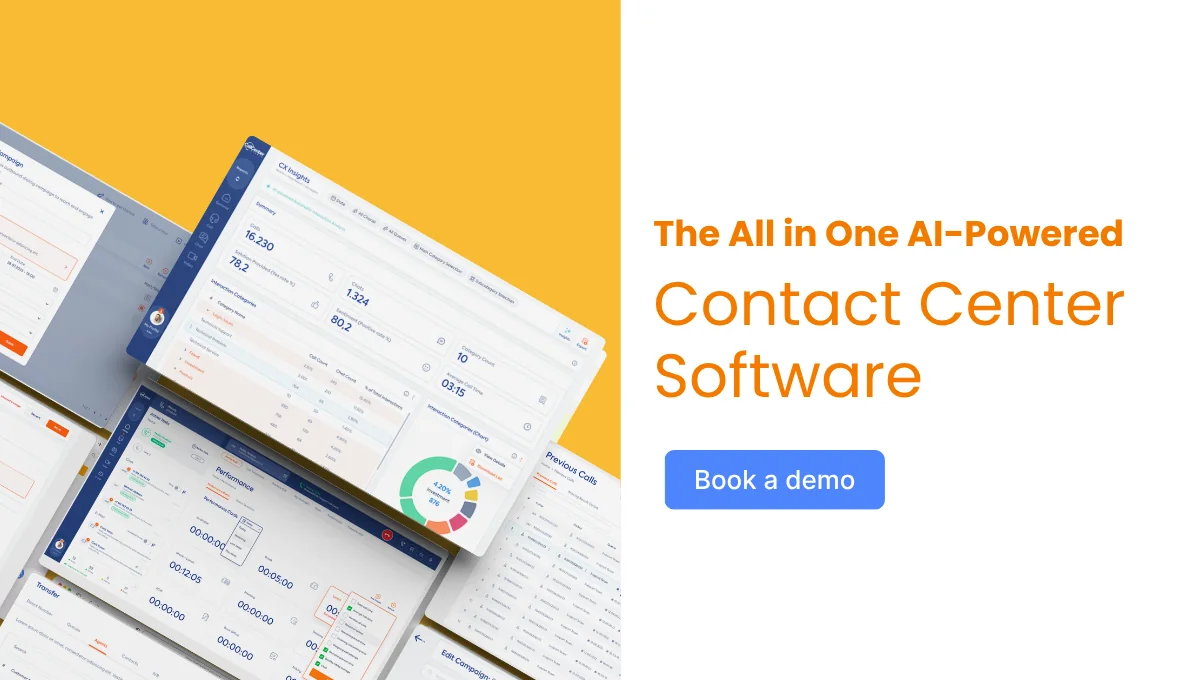
Call Center Studio’s CX Insights gives you the “mind-reading” edge you need to stay ahead. By leveraging AI-powered sentiment analysis and advanced NLP, our platform transforms raw interaction data into a clear roadmap for customer loyalty.
Key Features of Call Center Studio CX Insights
- Sentiment Analysis: Automatically tracks and analyzes customer emotional trends and satisfaction levels.
- Automatic Interaction Analysis: Analyzes voice and text interactions to categorize issues and surface recommended solutions for your team.
- Visualized Data Dashboards: Offers key metrics through graphs, charts, and trends.
- Periodic & Trend Analysis: Monitors how emotional and operational metrics change over time.
- Instant Context for Agents: A feature that allows agents to see AI-generated summaries of a caller’s previous interactions and sentiment before answering.
- Multi-Channel Support: Analyzes data across calls, emails, and chat interactions.