
Every second matters in a busy call center environment.
The pressure to balance speed with quality is constant. Customers expect fast resolutions and expert, human service.
The 3-minute call is often the gold standard for efficiency, though benchmarks vary by industry. For instance, some technical support calls may last longer.
Retail customer service teams, however, often aim for a three- to four-minute response time.
This article will deconstruct the anatomy of a near-perfect call. We will show how intelligent technology turns efficiency goals into reality.
The Blueprint of Efficiency (0:00–1:00)
The first minute sets the entire trajectory for the conversation. Rushed greetings can lead to miscommunication. Slow, rambling introductions waste precious time. Achieving the perfect call requires immediate focus and clarity from the agent.
The Power of a Strong Start
A successful call begins with a clear, concise greeting.
This step confirms the agent’s identity and prepares the customer to speak. Immediately after the greeting, the agent must employ active listening. This is a non-negotiable step. It ensures the agent understands the core issue without needing repeated explanations.
- Greeting: State the name and company clearly.
- Acknowledge: Confirm receipt of the customer’s query.
- Validate: Use language that shows empathy and understanding.
This stage is also where practical call scripting proves its worth.
The script should not sound robotic or forced. Instead, it must
- serve as a framework that guides the agent
- ensure all compliance requirements are met quickly
- prevent the agent from stalling while searching for the next step.
Issue Resolution and Best Practices (1:00–2:30)
The bulk of the 3-minute call is spent on diagnosis and resolution. Agents must quickly pivot from listening to problem-solving. This requires deep product knowledge and access to immediate information.
Driving Fast, Factual Resolutions
The goal is to provide a comprehensive answer the first time. This is known as First Contact Resolution (FCR).
Minimizing hold times is essential to improving customer satisfaction. That’s why you need to avoid unnecessary transfers that significantly inflate handle time, as per the core call handling best practices.
Plus, the agent must maintain control over the dialogue. This involves summarizing the following steps before executing them. It confirms the customer is aligned with the proposed solution.
If the conversation starts to drift, the agent gently brings the focus back to the primary issue. Efficiency should never sacrifice quality.
Conversation Optimization with AI and RTA
Traditional call monitoring is often slow and reactive. Managers listen to a tiny fraction of total calls after they have already ended.
This delay makes real-time coaching impossible. Modern solutions use artificial intelligence to change this workflow.
The Role of the AI-Powered Contact Center
An AI-powered contact center provides continuous, objective analysis of every interaction. This enables proactive management and coaching.
Call Center Studio is built specifically for this purpose. Its technology uses advanced speech and sentiment analysis. This helps to identify conversational bottlenecks instantly.
Call Center Studio delivers crucial features such as:
- CX Insights: These insights reveal trends in customer frustration or satisfaction. They pinpoint specific phrases, products, or processes causing issues.
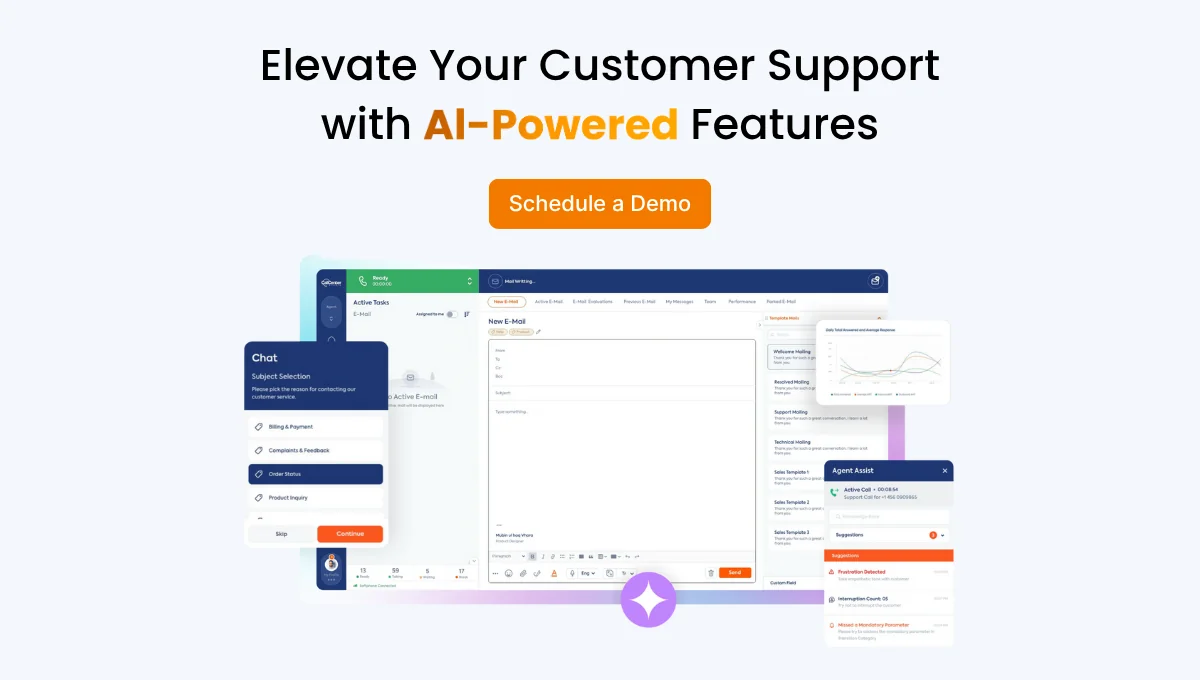
- Real-Time Analytics (RTA): RTA is arguably the most powerful tool. It allows supervisors to perform live call monitoring. If an agent is struggling, the system flags the interaction immediately.
- Guided Coaching: The platform suggests solutions to the agent during the call itself. This acts as a safety net that boosts agent performance.
This sophisticated call center conversation analysis enables immediate intervention.
It ensures the conversation stays on track. RTA is the foundation of successful conversation optimization. Companies that scale AI achieve improved customer satisfaction and greater innovation.

Seamless Support in an Omnichannel World
Customers want the same speed and quality whether they are calling, chatting, or messaging. The most effective contact centers unify these channels. They create a true omnichannel contact center.
Unifying Channels for Streamlined CX
The agent desktop must be clutter-free and centralized. Call Center Studio allows agents to
- manage various interactions from a single interface
- handle WhatsApp calls and chats alongside emails and voice calls.
This unified view provides the agent with a complete customer history, regardless of the channel previously used. This context is vital for quick resolution.
By seamlessly managing channels like the WhatsApp for Business API, support teams streamline their entire operation. The result is a dramatically improved experience with
- increased customer satisfaction and loyalty
- adherence to call handling best practices across all modalities
The Next Conversation Starts Now
The journey to consistently delivering a perfect call is ongoing.
It requires dedication to agent training and the right contact center software. Tools offering CX Insights and real-time analytics are the engine of modern efficiency and service quality.
Implementing these features leads to continuous workflow improvement. They transform average interactions into efficient, successful customer experiences.
Technology should amplify human potential.
Our platform gives your agents the power of AI to make every second count. Take control of your Average Handle Time and delight your customers simultaneously.
Ready to see how our AI-powered contact center can optimize your team’s efficiency?
To explore how Call Center Studio can provide the live call monitoring and analytics needed for conversation optimization in your team, contact us today!