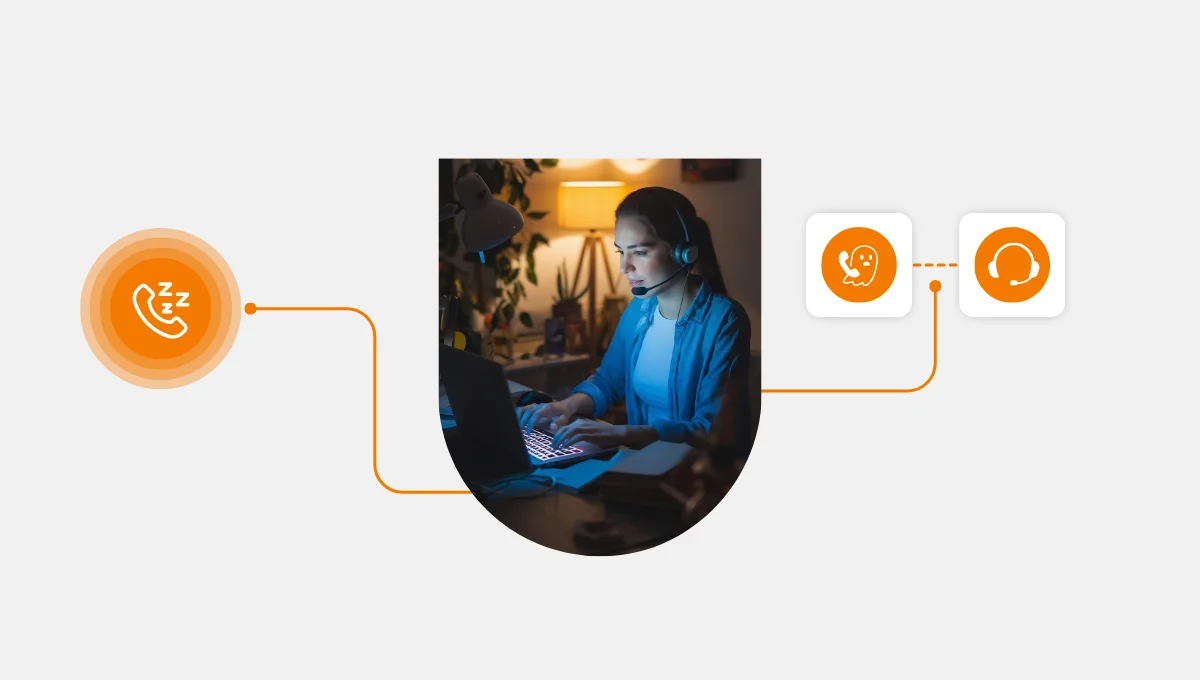
11:04 PM. A customer’s phone rings out to your main number. Your office closed five hours ago. They hear a recorded message, a beep, and silence.
Maybe they leave a voicemail. Maybe they hang up and try a competitor whose website promises “we’re here to help.” Either way, nobody on your team will know what they wanted until tomorrow, if at all.
That’s why after-hours call handling AI might be the smartest place to start your voice AI rollout.
Let’s walk through it step by step.
Why After-Hours Call Handling AI Is the Lowest-Risk Pilot
Ask many companies what happens to their after-hours calls, and the honest answer is often a shrug. One contact center implementation partner put it bluntly at a recent industry summit: most businesses send those calls to a general mailbox, and few can say what happens after that.
The same partner’s advice for starting with voice AI was simple: look for the low-hanging fruit first. After hours fits that description almost perfectly. Here’s why:
- The bar is low: Today, those callers get a mailbox. A voice AI agent after hours only has to beat voicemail, not your best Tier 2 agent.
- Nobody’s displaced: You’re adding coverage where there’s none, not replacing people.
- Mistakes are contained: If something goes wrong at 2 AM, it affects a small slice of traffic, and you can review every call the next morning.
- It’s easy to measure: Before: zero handled calls. After: you’ll know exactly what changed.
The technology isn’t the bottleneck anymore, either. On October 1, Microsoft launched new real-time speech models, including MAI-Transcribe-2-Streaming and MAI-Voice-2.1. Releases like these keep coming.
The hard part isn’t finding a capable engine. It’s choosing where to point it first. And the upside can be real. SiliconANGLE’s summit takeaways reported that fixing after-hours coverage for one rehabilitation facility “resulted in millions of dollars in revenue.” Your mileage may vary, but the point stands: the calls are worth something.
What a Voice AI Agent Can Realistically Handle After Hours
A voice AI agent after hours shouldn’t try to do everything. The night shift isn’t the place for complex disputes. It’s the place for the predictable stuff that piles up in voicemail. Four categories work well:
- Status questions: “Has my order shipped?” “Is my appointment still on for Thursday?” If the answer lives in a system, the AI agent can fetch it.
- Bookings and changes: Scheduling, rescheduling, or cancelling an appointment without waiting until 9 AM.
- Message capture: For anything the AI agent can’t solve, it takes a structured message: who, what, how urgent, best callback time. Far more useful than a rambling voicemail.
- Triage: Sorting what can wait until morning from what can’t, and routing urgent cases according to your rules.
Picture this: At 1:15 AM, a customer calls to move a delivery slot. Instead of “please leave a message,” they hear, “Sure, I can help with that. Which day works better?” Call over in two minutes. Nobody has to call them back.
Your existing IVR doesn’t need to be thrown out to make this happen. AI Connector converts existing menu scenarios into an intent-based voice system, so callers say what they need instead of pressing 1, then 4, then 2.
3:00 AM, the line you don’t cross. The quietest hour is a good time for a hard rule. Some calls should never stay with an AI agent, night or day:
- Emergencies or anything safety-related
- Complaints from customers who have already called about the same issue
- Anything involving sensitive judgment, like disputes, cancellations with retention stakes, or legal questions
Write these down before go-live. For each one, decide where it goes after hours: an on-call number, a priority callback queue, or an emergency line.
Trigger rule worth stealing: if the caller asks for a human twice, stop trying and route them.
The Morning Handoff: Where Overnight Call Handling Pays Off
The morning handoff is where many after-hours pilots fall apart. The night went fine, but the morning team walks in to a pile of unstructured notes and has to start every callback from scratch.
Plan the handoff as carefully as the night:
- Every overnight conversation gets a summary. What the customer wanted, what the AI agent did, and what’s still open.
- Open items become a prioritized callback list for the first agents on shift, urgent cases first.
- Context travels with the customer. When someone calls back at 9 AM, the human agent should already know about last night.
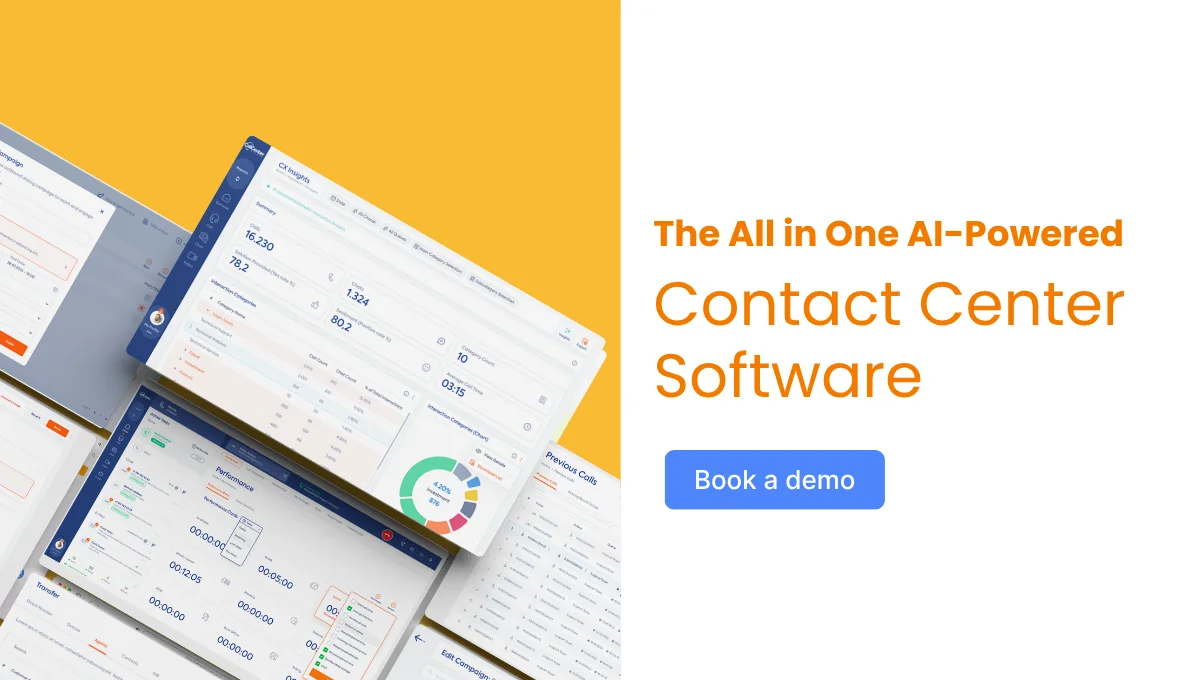
Two things help here. When a call needs a person in real time, AI Connector transfers it to the right live agent within seconds with full history and context. And when a customer calls back later, CX Insight gives human agents an AI analysis of the caller’s previous conversation, including the past inquiry, the outcome, and the sentiment. Your 9 AM agent opens with “I see you called last night about your delivery” instead of “How can I help you today?”
Measure Your Overnight Call Handling Pilot Before You Go Daytime
You’ve run overnight call handling for a few weeks. Before you let AI anywhere near peak hours, check the evidence:
- Handled without callback. How many overnight calls were fully resolved by the AI agent?
- Message quality. Were captured messages complete enough to act on without re-asking?
- Repeat contacts. Did customers who used the AI agent call back about the same thing the next day?
- Sentiment. CX Insight’s sentiment analysis and interaction categories show how those conversations felt and what they were about.
- Escalation accuracy. Did urgent calls reach the right place, every time?
If the numbers hold up, extend gradually: early evenings, then weekend daytime, then low-complexity daytime flows. If they don’t, you’ve learned it on your quietest hours, not your busiest.
Back to 11:04 PM
Remember that ringing phone? Same caller, same hour. This time, someone answers, solves the simple request, takes a clear message for the rest, and hands a tidy summary to the morning team.
That’s not a moonshot. It’s a sensible first step, and a measurable one.
Turn Your Night Shift Into Your Pilot
Your after-hours callers are already telling you what they need. Right now, nobody’s listening. Book a demo to see how AI Connector connects your preferred AI engine to your existing call flows, managed from your Call Center Studio panel. You can also explore our wider AI tools, from conversational IVR to automatic post-interaction analysis.
Book your AI Connector demo today
FAQ
What can after-hours call handling AI do?
It can answer status questions, book or reschedule appointments, capture structured messages, and triage urgent calls according to your rules. Anything it can’t resolve goes to an on-call contact or becomes a prioritized callback for the morning team.
Will customers accept an AI agent at night?
Many will, especially when the alternative is voicemail. Be upfront that they’re talking to an AI agent, keep it focused on simple tasks, and always offer a clear path to a human or a callback.
What should never be automated?
Emergencies, safety issues, repeat complaints, and anything needing sensitive judgment. Define these before launch and route them to an on-call contact or a priority callback queue.
Which AI engine should we use?
The one that performs best on your callers’ languages and use cases. AI Connector works with ChatGPT, Claude, ElevenLabs, Google Dialogflow, Microsoft Azure, Vapi, and custom AI agents, and you can swap AI agents later without vendor lock-in.