
Handling angry callers is the primary driver of agent burnout and one of the hardest things to get right without the proper training.
But the secret from the world of customer conversation psychology is that anger is often a mask for feeling unheard. When a customer is shouting, they aren’t just looking for a refund or a fix. They are looking for acknowledgement.
This is why we are going to talk about 7 empathy statements in this article. They aren’t just “polite phrases”; they are strategic tools for de-escalation techniques. And when used correctly, they can shift a call from a confrontation to a collaboration in seconds.
The Power of Acknowledgment
Before we dive into the list, it’s important to understand why empathy works. In a high-tension call, the customer’s “amygdala”, which is the part of the brain responsible for the fight-or-flight response, is in the driver’s seat. Logic won’t work yet. You can’t explain a policy to someone whose brain is in “fight” mode.
Empathy “hacks” this response. By acknowledging the emotion, you signal to the customer’s brain that the threat is gone and you are an ally. This allows them to calm down and listen to your solution.
1. “I can hear how frustrating this has been for you, and I appreciate your patience while we fix it.”
This is a classic “acknowledgment + gratitude” combo. By naming the emotion (frustration), you validate their experience. By thanking them for their patience, you “nudge” them to act more patiently.
2. “If I were in your shoes, I would feel the same way.”
This is the ultimate “I’m on your side” statement. It builds immediate trust because you aren’t defending the company; you are humanizing the situation. It’s one of the most effective conflict resolution tools in customer service.
3. “Thank you for bringing this to our attention. Let’s work together to make this right.”
This shifts the dynamic from “Me vs. You” to “Us vs. The Problem.” It invites the customer to be part of the solution, which naturally lowers their defensive walls.
4. “I want to make sure I completely understand your situation so I don’t miss anything important.”
Angry callers often repeat themselves because they fear the agent isn’t listening. This statement shows active listening skills and proves you are committed to a thorough resolution.
5. “I realize how much time this has taken out of your day, and I’m going to do my best to resolve this as quickly as possible.”
Time is the most valuable currency. Acknowledging the “time cost” of a problem is a sophisticated way to show empathy and respect for the customer’s life outside of this phone call.
6. “That sounds like a very difficult experience. I am so sorry you’ve had to deal with this.”
Sometimes, a simple, sincere apology for the experience (rather than just the technical error) is all it takes to break the tension.
7. “You’re right to be upset about this. Let’s see what the next best steps are.”
Confirming that the customer is “right” to feel their feelings is like pulling the plug on their anger. Once they feel justified, they usually stop shouting.

Beyond the Script: Scaling Empathy with Call Center Studio
Having a list of phrases is a great start, but in a busy contact center, how do you ensure these agent communication skills are being applied consistently? How do you know if an agent is actually de-escalating or if they are just reading a script with a robotic tone?
This is where Call Center Studio transforms call center quality management.
1. Real-Time Call Analytics and Sentiment Scoring
Our platform doesn’t just record calls; it “feels” them. Using real-time call analytics, the system monitors the “emotional temperature” of both the agent and the caller. If a customer’s sentiment score drops into the “dark red” zone, the system can instantly alert a supervisor.
Even better, the AI can provide real-time suggestions to the agent’s screen: “Customer sentiment is low. Try an empathy statement now.” This live guidance is a game-changer for handling angry callers.
2. CX Insights: Finding the “Empathy Gap”
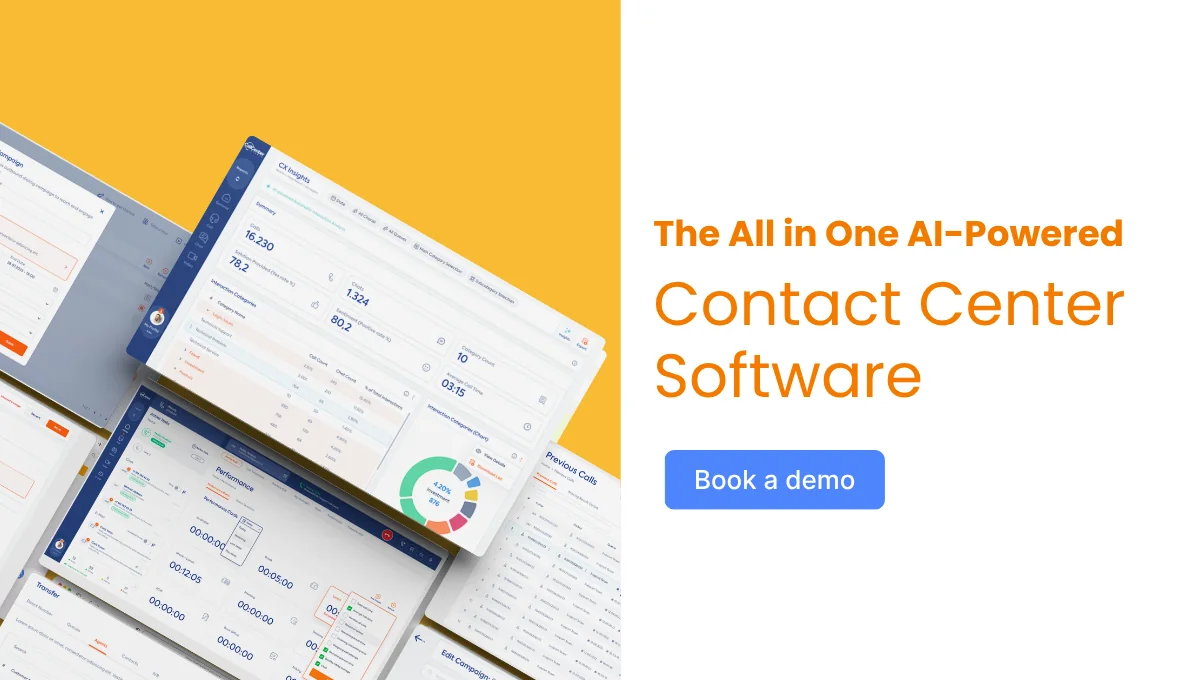
With CX Insights, managers don’t have to guess which agents need help. The AI analyzes 100% of conversations to identify patterns. You might find that Agent A has a high AHT but also a high CSAT because they use empathy effectively. Conversely, you might see that Agent B resolves calls quickly but has low sentiment scores because they skip the empathy and go straight to the facts.
These data-driven insights allow for much more effective agent coaching. Instead of generic training, you can provide “surgical” coaching on specific call center soft skills.
3. Voice Analytics and “Tone” Detection
Empathy is 10% what you say and 90% how you say it. Our advanced call center analytics can detect “speech stress” and tone. If an agent is using empathy statements but their tone is sarcastic or dismissive, the system flags it. This ensures that the “empathy” in your contact center is genuine and effective.
Technical Integration: Making Empathy Effortless
The reason agents often fail to show empathy is that they are too busy fighting with their software. If an agent is hunting through three different legacy systems to find a tracking number, they don’t have the “mental bandwidth” to be empathetic.
By using a cloud-native contact center like Call Center Studio, you remove the technical friction.
- Unified Desktop: Everything the agent needs is on one screen.
- Automated Knowledge Surfacing: While the agent is saying, “I understand your frustration,” the AI is already pulling up the refund policy or the customer’s history.
- Reduced Cognitive Load: When the technology handles the “search and find,” the human agent can focus on the “listen and feel.”
The ROI of Empathy
Is all this effort worth it? Absolutely. High-empathy contact centers see:
- Lower Churn: Customers who have a complaint handled with empathy are often more loyal than those who never had a problem at all.
- Lower Agent Turnover: Dealing with angry people is exhausting. When agents have the tools to de-escalate calls quickly, their job becomes less stressful and more rewarding.
- Higher First Contact Resolution (FCR): Empathy leads to better understanding, which leads to solving the right problem the first time.
In 2026 empathy is a core business metric. Ready to turn your most difficult calls into your biggest wins?