
The business landscape of 2026 is vastly different from that of just a few years ago. Customer expectations have shifted from “fast service” to “predictive, hyper-personalized experiences.” That is why for the decision-makers, choosing the right communication infrastructure is a strategic pivot.
As we navigate this year, legacy systems and even early-stage cloud tools are proving insufficient for the demands of modern commerce. A call center software buyer’s guide in 2026 must prioritize more than just dialers and queues; it must focus on intelligence, agility, and the human-AI partnership.
If you are evaluating a cloud call center software this year, here are the ten non-negotiable features you cannot ignore, and how Call Center Studio is setting the benchmark for each.
1. Cloud-Native Architecture with Global Elasticity
In 2026, “cloud-hosted” is not enough; it must be cloud-native. A truly scalable contact center solution must allow a business to scale from 50 to 5,000 agents in minutes, not weeks.
For instance, like Call Center Studio, Google-native infrastructure ensures that your operations are resilient, global, and free from the constraints of physical hardware. This elasticity is vital for seasonal businesses or rapidly growing startups that cannot afford downtime.
2. Omnichannel Continuity (Not Just Multi-Channel)
The modern customer starts a conversation on WhatsApp, continues it via email, and expects the final resolution through a voice call. Customers do not want to repeat their story. A top-tier omnichannel contact center platform treats all these interactions as a single continuous thread. Their unified agent desktop ensures that every channel like voice, chat, social media, and SMS are integrated into one view, eliminating the friction of toggling between disconnected apps.
3. Generative AI and Agent Assist
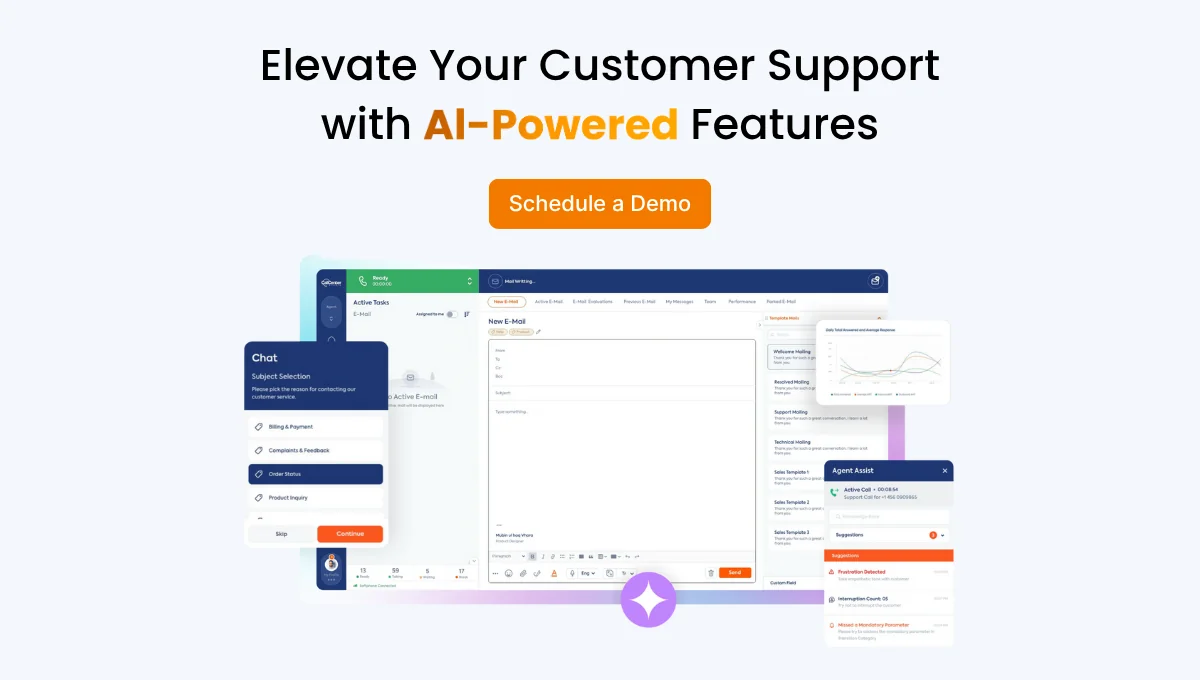
By 2026, AI-powered call center features such as “Agent Assist” are critical for survival. This feature listens to live calls and provides real-time suggestions, surfaces knowledge base articles, and automates call summaries. This reduces the cognitive load on agents and slashes training time, allowing new hires to perform like seasoned pros from day one.
4. Advanced CX Insights and Sentiment Analysis
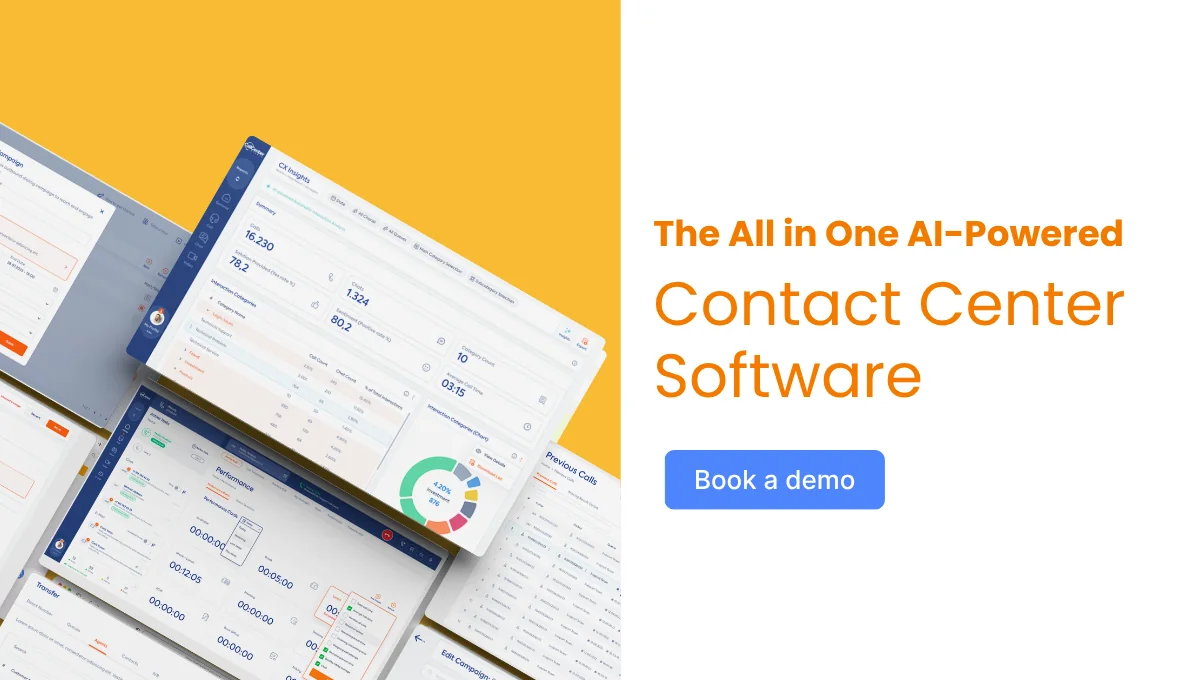
Standard metrics like AHT (Average Handle Time) only tell you how long a call lasted, not how it felt. Modern CX Insights use AI to analyze the sentiment, tone, and intent of every interaction. These advanced reports go beyond the surface, identifying why customers are frustrated before they even say it. This allows managers to proactively fix issues in the customer journey rather than reacting to complaints.
5. Intelligent IVR and Self-Service Automation
Customers in 2026 value their time above all else. A modern Interactive Voice Response (IVR) system must be “conversational,” not a “numeric maze.” With Natural Language Understanding (NLU), Call Center Studio allows customers to speak their needs in plain language. This facilitates true self-service for routine tasks like balance checks or appointment scheduling, freeing up human agents for complex, high-value problem-solving.
6. Real-Time Analytics and Predictive Dashboards
Static reports from yesterday are useless for today’s fast-paced environment. Real-time analytics are essential for monitoring queue health and agent performance as it happens. Furthermore, predictive modeling can alert supervisors to potential SLA breaches before they occur. Cloud-native contact centers provide dynamic dashboards that give leadership the data-driven confidence to make split-second operational shifts.
7. Workforce Optimization (WFO) and Quality Management
Managing a remote or hybrid workforce requires sophisticated tools. Workforce optimization features in 2026 include automated scheduling, screen recording for quality assurance, and gamification to keep agents engaged. When you use modern contact center infrastructure, these tools are already in the platform, ensuring that quality management isn’t a separate chore but a built-in part of the daily workflow.
8. Seamless API Integration and Low-Code Flexibility
Your contact center software should not be an island. It must talk to your CRM (Salesforce, HubSpot, etc.), your ERP, and your custom internal databases. A modern buyer’s guide must emphasize flexible API architecture and “Low-Code” integration capabilities. Call Center Studio allows businesses to connect their tech stack seamlessly, ensuring a 360-degree view of the customer.
9. Robust Security and Compliance (GDPR, HIPAA, PCI-DSS)
As AI handles more data, security risks increase. In 2026, buyers must ensure their software complies with global data protection standards. Choose the platforms that prioritize security with end-to-end encryption, multi-factor authentication, and compliance certifications that protect both the business and the consumer. In a world of deepfakes and data breaches, trust is the ultimate currency.
10. Unified Agent Desktop for Enhanced UX
Agent experience (AX) is the precursor to customer experience (CX). If an agent is frustrated by a clunky interface, the customer will feel it. A unified desktop can significantly reduce handle time by bringing CRM data, call controls, AI prompts, and chat windows into a single, intuitive workspace. Choose a program that minimizes “tab fatigue,” which directly correlates to lower agent burnout.
Why Call Center Studio is the Strategic Choice for 2026
Navigating the sea of contact center features in 2026 can be overwhelming. However, the common thread among successful organizations is the move toward “Intelligence-First” platforms. Call Center Studio distinguishes itself not just as a software provider, but as a future-ready partner.
Here is why it stands out in this buyer’s guide:
The AI-Native Advantage
While many legacy providers are “bolting on” AI as an afterthought, Call Center Studio was built to thrive in a data-rich environment. Our AI products provide the context needed to drive business growth.
Reliability Without Complexity
Call Center Studio offers enterprise-grade power with a user-friendly interface. Our call center reporting tools are designed for clarity, allowing managers to see the “big picture” without needing a degree in data science.
Want to learn more? Talk to one of our experts now.