
Every interaction of a customer is a data point. However, not all data is created equal, and more importantly, not all tools used to capture that data serve the same purpose.
For many growing businesses, a common point of confusion arises when choosing between a phone call tracker and a comprehensive call center software platform.
At first glance, both seem to handle “phone calls.” But while one acts as a digital ledger for marketing attribution, the other functions as a high-performance engine for customer experience (CX) and operational excellence.
In this article, we’ll break down the fundamental differences and explain why a cloud-based solution like Call Center Studio is the missing link for businesses looking to scale.
What is a Phone Call Tracker? (The Basics)
A phone call tracker is primarily a marketing tool. Its core function is to bridge the gap between your online marketing efforts and offline phone conversions.
What It Can Do:
- Log Calls: It keeps a record of who called and when.
- Track Sources: Using Dynamic Number Insertion (DNI), it tells you if a caller came from a specific Google Ad, a Facebook campaign, or a physical billboard.
- Basic Reporting: You get a bird’s-eye view of call volumes and durations.
What It Cannot Do:
A call tracker is essentially a “passive” listener.
- It cannot manage a team of agents,
- It cannot route calls based on complex logic, and
- It lacks the interactive tools needed to resolve a customer’s issue in real-time.
If your only goal is to see which ad campaign is making the phone ring, a tracker might suffice. But if you need to manage those calls to ensure customer satisfaction, it will fall short.
The Power of Modern Call Center Software: Beyond the Log
As your business grows, “knowing where the call came from” is no longer enough. You need to know:
- How that call was handled,
- How long the customer waited, and
- Whether their problem was solved.
This is where a cloud call center platform like Call Center Studio enters the picture.
Unlike a simple tracker, a full-scale call center software is an “active” management ecosystem. Let’s explore the AI-powered capabilities that set it apart.
1. Omnichannel Customer Communication
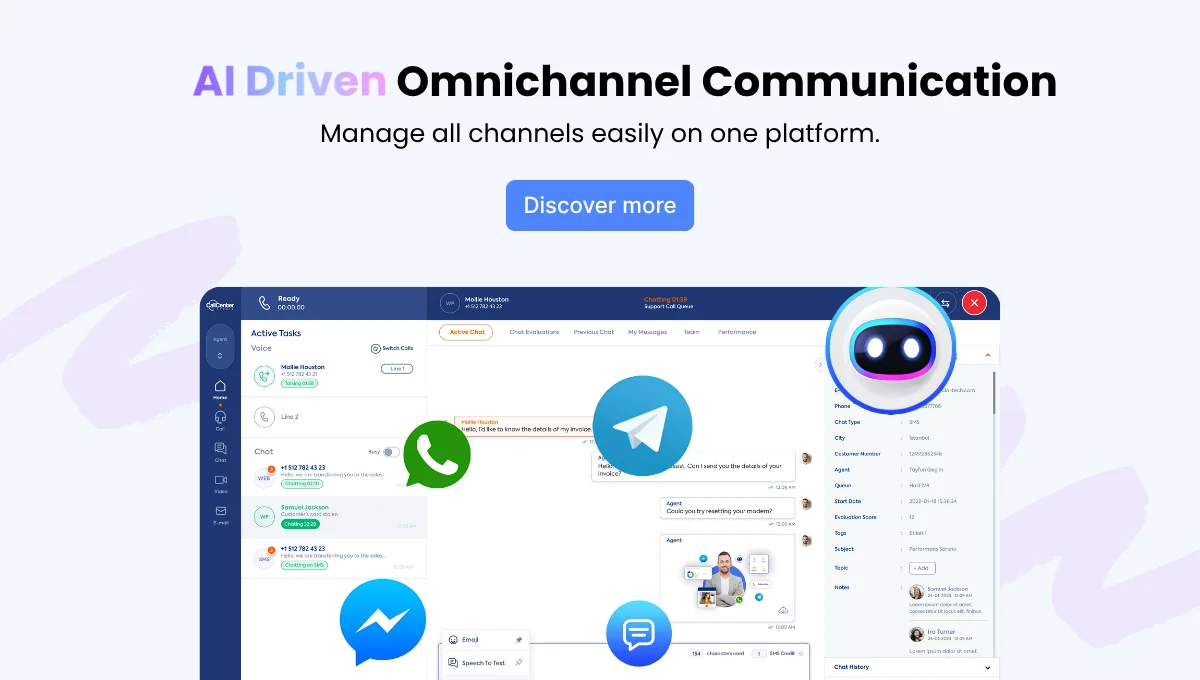
A phone call tracker only tracks… calls. But modern customers don’t just call; they text, email, and use WhatsApp. Call Center Studio provides an omnichannel experience, allowing your agents to manage all these conversations from a single interface. This ensures a seamless journey where the customer doesn’t have to repeat themselves across different channels.
2. Intelligent Routing and IVR
Imagine a VIP customer calling your support line. A tracker simply logs the call. A modern call center platform uses Interactive Voice Response (IVR) and smart routing to recognize the caller’s number and immediately direct them to the most qualified agent or their dedicated account manager. This drastically reduces wait times and improves First Call Resolution (FCR).
3. AI-Powered Insights and Real-Time Analytics
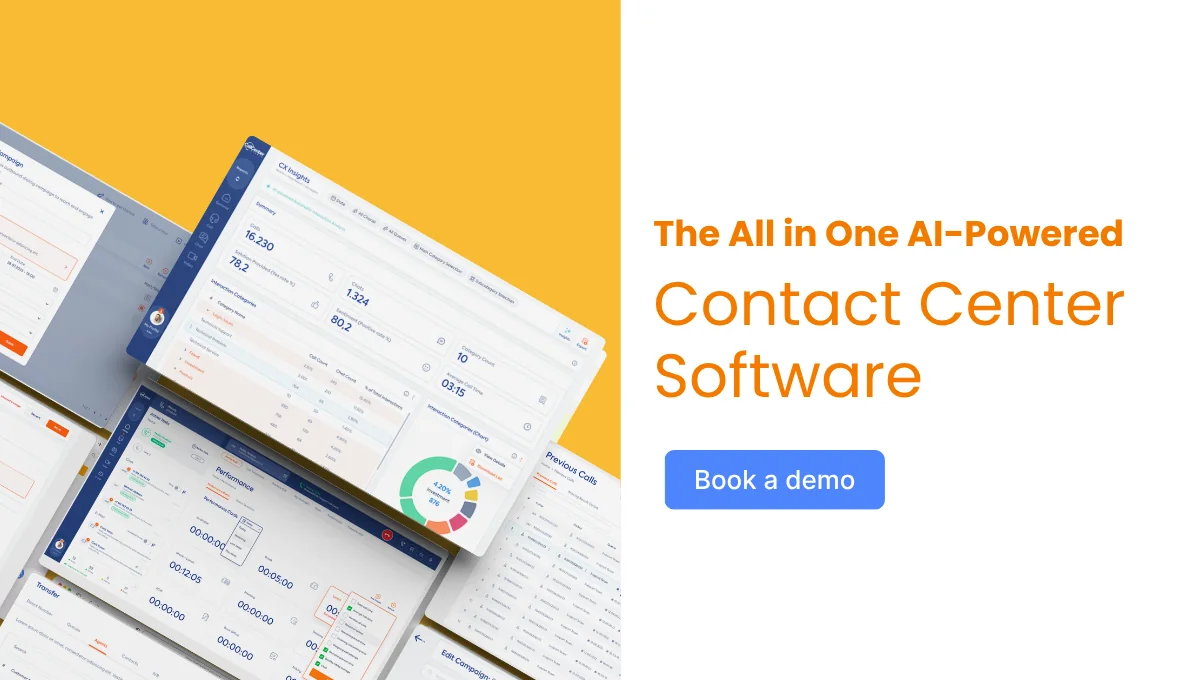
While a tracker gives you a list of calls, Call Center Studio provides real-time call analytics and CX Insights. With AI-powered tools, you can perform sentiment analysis to understand the caller’s mood or use automated transcriptions to identify recurring issues without listening to hours of recordings.
Let’s see two alternatives through a practical breakdown
| Feature | Phone Call Tracker | Call Center Studio (CCaaS) |
| Primary Goal | Marketing Attribution | Customer Experience & Operations |
| Call Management | Simple Logging | Advanced Routing & Queuing |
| Communication | Voice Only | Omnichannel (Chat, SMS, Email, Voice) |
| Automation | Minimal | High (AI, IVR, Auto-dialers) |
| Reporting | Basic Volume Metrics | Deep CX Insights & Agent Performance |
A phone call tracker is a great starting point for small businesses or solo entrepreneurs who only need to justify their marketing spend. If you are a local florist running a single Google Ad and answering calls on your mobile phone, a tracker will help you see if your $100 ad spend is working.
However, if you have a team of agents (even as few as three to five) or if your customer satisfaction scores are tied to your revenue, you need call center management software.
Real-World Example: The Mid-Sized Insurance Agency
Consider an insurance agency. With a call tracker, they know a lead came from their “Auto Insurance” landing page. Great. But what happens if that lead waits on hold for 5 minutes and hangs up? The tracker logs a “missed call.”
With Call Center Studio, the agency can:
- Use IVR to let the caller select “New Policy” or “Claims.”
- Route the “New Policy” call to the top-performing sales agent.
- Use Real-Time Dashboards to see that call volume is spiking and move agents from administrative tasks to the phones.
- Review Quality Management metrics to ensure the agent followed compliance protocols.
The choice between call tracking vs call center software comes down to your business objectives.
- If you are purely focused on marketing analytics and have no dedicated support team, start with a tracker.
- If you are focused on customer retention, agent productivity, and brand growth, a professional platform like Call Center Studio is non-negotiable.
Don’t just track the call, own the entire experience. Want to learn more about? Talk with our expert now!