
BPOs are trying to manage dozens of different clients, each with their own “mini-universe.”
Jumping from system to system to gather reports for Brand X while trying to tweak campaign settings for Brand Y is exhausting for supervisors.
Plus, this fragmentation means onboarding a new client can take weeks, and your growth potential eventually hits a technological ceiling.
Multi-Tenancy architecture is built to fix these problems.
The logic is simple: you manage all your clients from a single, centralized dashboard, yet every client’s data, settings, and security remain completely isolated. It eliminates operational friction, and thanks to the “pay-as-you-go” model, it allows you to scale your business as fast as you can grow.
What is Multi-Tenancy?
In the context of cloud contact centers for BPOs, multi-tenancy refers to an architecture where a single software instance serves multiple “tenants” (clients).
Each client’s data is partitioned and invisible to others; however, the BPO provider can manage the entire ecosystem from a centralized contact center panel.
While this provides technical ease, it also offers a strategic advantage. It provides you with the perspective and data necessary for high-level decision-making processes. Furthermore, it ensures that Client A’s data does not mix with Client B’s during your operations.
What Problems Does the Multi-Tenancy Structure Solve?
1. Centralized Management: One Dashboard to Rule Them All
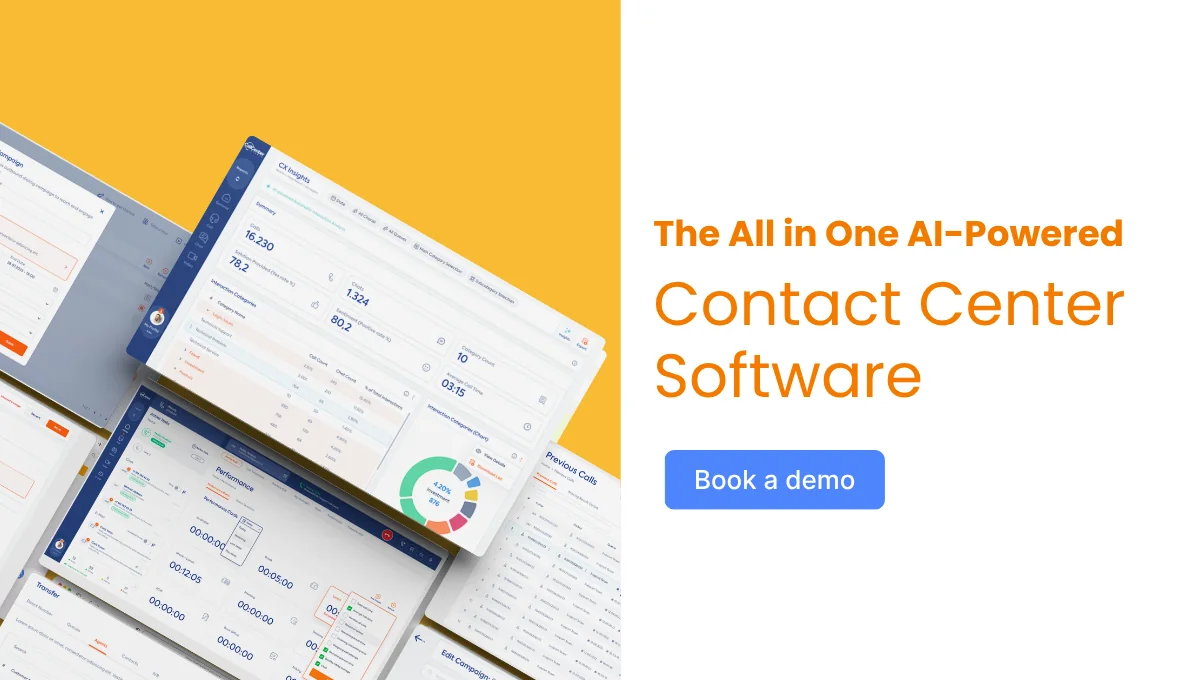
The core value of this architecture lies in its ability to simplify complexity. Instead of managing a dozen different instances, your IT and operations teams work within a single unified interface. Through this central screen, you can:
- Instantly assign agents to specific client campaigns.
- Adjust IVR flows and routing logic across different accounts without needing deep technical expertise.
- Monitor global health metrics while having the ability to dive deep into specific client issues.
Can you imagine the time a supervisor would save if they could see the density in one client’s queue and redirect agents from a quieter account to help within seconds?
2. Real-Time Reporting at Client and Campaign Levels
In the BPO world, the only language that matters to your clients is data. Your clients don’t just want to know that you are “doing well”; they want to see the real-time contact center reporting that proves it.
With advanced reporting tools, BPOs can go beyond descriptive metrics like Average Handle Time (AHT) and focus on diagnostic insights. Perhaps an agent is struggling with a lack of knowledge about a specific product? Or is a particular campaign showing high variability in First Response Time (FRT)?
Having these insights at your fingertips allows you to turn raw data into personalized coaching plans, ensuring every client receives premium-level service.
3. Rapid Client Onboarding and Scalability
Growth in the BPO sector often comes in waves. Winning a major contract is a cause for celebration, but the implementation phase can be daunting. Configuring legacy systems for a new client can take weeks or even months.
A multi-tenant contact center solution changes this dynamic. Since the infrastructure is already in place, bringing a new client into the system is as simple as creating a new tenant profile and configuring their specific parameters.
- Speed to Market: Gain a competitive advantage during peak seasons like Black Friday by launching new campaigns in days, not weeks.
- Pay-As-You-Go Model: One of the most significant benefits of a cloud-based platform is cost efficiency. BPOs can increase or decrease agent numbers according to seasonal demand and only pay for what they use.
4. Ensuring Data Security and Compliance
When managing clients in sensitive sectors like healthcare or finance, security is a non-negotiable issue. Clients want to be sure that their data is processed in a HIPAA or GDPR-compliant environment.
BPO client management offered through Call Center Studio guarantees:
- Strict Isolation: Even though you use a single platform, databases are logically separated.
- Audit Trails: Maintain peace of mind during client audits by keeping clear records of who accessed which data and when.
- Secure Integrations: Whether it is a custom CRM or a standard tool, integrations are managed with secure protocols to prevent data leaks.
5. Improving the Agent Experience
We often focus on the client, but what about the frontline employees?
A fragmented system is as frustrating for agents as it is for managers. When agents have to jump between different tabs and tools, “talk time” is spent navigating the system rather than focusing on the customer.
By consolidating CRMs, support ticketing tools, and communication channels into a single unified interface, you can ensure agents focus on the customer journey. This leads to:
- Reduced training time for new hires.
- Lower staff turnover rates thanks to better and more intuitive tools.
- Increased First Contact Resolution (FCR) rates because the agent can access all the information they need from one place.

Conclusion: Is Your Infrastructure Ready for Growth?
Mastering BPO services requires more than a large workforce; it requires a smart foundation. Transitioning to a multi-tenant contact center is not just a trend; it is a necessity for those who want to remain competitive in 2026 and beyond.
Can your current system handle a 300% surge in volume tomorrow? If your answer is “maybe,” it might be time to rethink your strategy.
Take the Next Step and Schedule a personalized demo
Don’t let the constraints of legacy systems hold your BPO back.