

The term omnichannel derives its prefix from the Latin word omnis, meaning “all” or “every.” In an era when the lines between digital and physical spaces have blurred, this etymological root perfectly captures the essence of a modern business strategy: integrating all available touchpoints into a single, seamless ecosystem.
Rather than viewing a website, a mobile app, and a brick-and-mortar store as separate silos, an omnichannel approach treats them as a unified whole. This ensures that regardless of how or where a customer chooses to engage, their experience remains consistent, fluid, and universally connected.
In this article, we’re going to discuss how omnichannel integrated support helps your silo removal and improves the customer journey.
Create Seamlees Customer Journey
Using an omnichannel platform transforms the customer journey from a series of disconnected touchpoints into a fluid and holistic adventure. Staying true to the concept of omnis, it ensures that every interaction a customer has with a brand becomes part of a single, larger picture.
We can list mainly 5 primary benefits of this approach for the customer journey:
1. Continuity and a Seamless Experience
The biggest obstacle in a customer journey is the feeling of “disconnection.” Omnichannel platforms allow a customer to start a transaction on one channel (e.g., adding an item to a cart on mobile) and pick up exactly where they left off on another (e.g., in-store or on a desktop). Because data flows in real-time, the customer never has to repeat themselves.
2. Personalized Communication
Since data from all channels is gathered in a single hub, a customer’s past preferences, purchasing habits, and interests can be analyzed effectively. This allows for:
- Suggesting only the products the customer actually needs.
- Engaging through the right channel (email, SMS, or push notification) at the right time.
3. Time Savings and Accessibility
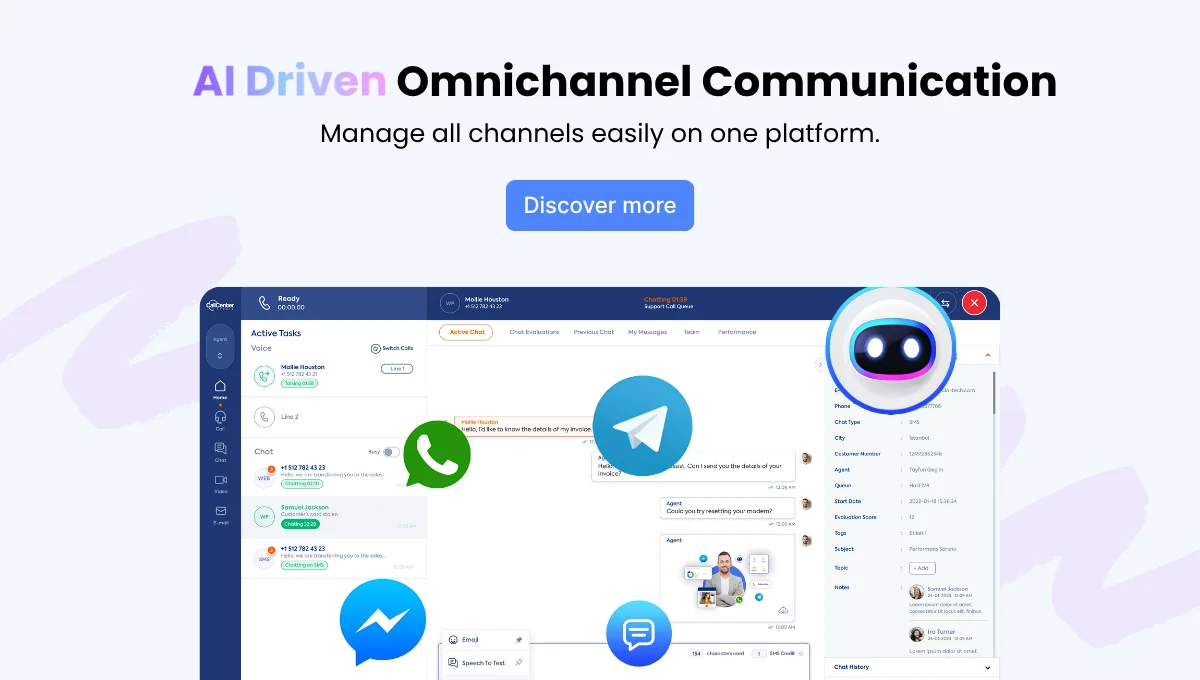
Customers want to use the channel most convenient to them when they have a question or encounter an issue. Thanks to an omnichannel infrastructure, a user who tweets at customer service will find that when they later call the help desk, the agent is already aware of the previous correspondence. This shortens resolution times and directly boosts customer satisfaction (CSAT).
4. Trust and Brand Loyalty
When a customer’s physical store experience matches the quality and tone of their digital experience, trust in the brand is reinforced. A consistent “brand voice” makes the customer feel valued and recognized, which fosters long-term loyalty.
5. Flexible Purchasing and Delivery Options
It offers maximum flexibility during the most critical stage of the journey like BORIS and BOPIS, which is a part of the “decision and action” phase:
- BORIS: When a customer brings an online purchase back to a physical location (BORIS), store staff can access the online order details within seconds through the platform. The return is approved instantly in the digital system, and the refund process is triggered automatically. If these platforms were disconnected, store personnel would be unable to see the online transaction, forced to tell the customer, ‘We cannot process this return here.'”
- BOPIS: If a customer wishes to buy an item online and pick it up in-store (BOPIS), the platform must have real-time visibility into that specific store’s inventory. Without an omnichannel infrastructure, the website remains unaware of local store stock, leading to the frustrating scenario where a customer arrives only to find the item is actually unavailable. The platform prevents this error by unifying stock data from all stores and warehouses into a single source of truth.
This flexibility increases your customers’ journey from digital website to physical store.
Remove the Silos like Pros
If Omni is the philosophy of the “whole” and the “universal,” then the Silo is its absolute antithesis: the fragmented, the isolated, and the disconnected.
To truly embrace the “Omni” spirit, one must first dismantle these structural barriers.
In traditional corporate structures, departments (marketing, sales, logistics, customer service) operate as independent “silos,” each with its own separate goals and databases.
- The Problem: A customer cannot carry the experience they had in one channel (e.g., in-store) over to another (e.g., a mobile app). Because data does not flow from one silo to another, the customer is forced to introduce themselves from scratch every time.
- The Solution: Removing silos means managing data and operations from a single center (the omni-hub). This is not merely a software integration; it is the unification of teams around shared KPIs (Key Performance Indicators).
The Pioneers: Who Tamed the Silos?
While the term “omnichannel” entered the literature in the early 2010s, Best Buy is generally recognized as the first and most successful company to implement this system as a full-scale “silo removal” operation.
- Best Buy (The Pioneer of Transformation)
In 2012, facing potential bankruptcy, Best Buy launched a strategy called “Renew Blue.” At that time, their physical stores and website operated like two separate companies. It is a classic silo structure. By tearing down inventory silos, they transformed their stores into “distribution hubs,” allowing items purchased online to be shipped from the nearest local store.
- Disney (The Pioneer of Experience)
Disney turned silo removal into a “guest experience” project. Through MagicBand wristbands, they integrated hotel reservations, park tickets, and payment systems into a single device. By linking the hotel management system with park operations, they achieved flawless integration.
- Starbucks
Through the Starbucks Rewards program, the company eliminated all barriers between the mobile app, the website, and the physical store. The fact that an order placed on a phone appears instantly on the barista’s screen while loyalty points update simultaneously is a prime example of the total collapse of technological and operational silos.
The 3 Main Steps to Removing Silos
- Data Integration: Ensuring all channels see the same “Customer Profile” (The Single Source of Truth).
- Operational Alignment: Ensuring store employees view online sales as a support system rather than a threat.
- Logistics Unification: Merging warehouse and store inventories into a single, unified pool.
Whether it is through seamless logistics like BOPIS or the personalized recognition of a loyal customer, the goal remains the same: to be present wherever the customer is. As industry pioneers have shown, those who unify their data and operations are the ones who build lasting trust and loyalty.
You no longer have the luxury to wait. Equip your business with the 21st-century infrastructure and mindset of Call Center Studio.
Start your free trial now and launch your professional omnichannel customer service journey today.