

A customer says, “I guess that works” during a support call. Is that satisfaction or a polite way of saying, “I’m never calling you again”?
Your agent might miss the subtle disappointment. But AI picks it up like it’s got emotional X-ray vision.
That is the problem traditional contact centers have been stuck with for years. They listen, but they don’t really hear. So, the frustration’s dressed up in nice words. The churn signals are tucked inside “successful” transactions, and the product complaints are buried in unreviewed calls.
AI is changing that by catching what humans physically can’t when dealing with massive conversation volumes.
What AI Actually Hears When Your Customers Talk
When AI analyzes a customer call, it’s looking at everything: the words, the pauses, the sighs, even the tone behind “Thanks a lot.”
Think about the vibe difference here: “Your team solved my problem.” vs. “Well, I suppose the issue is technically resolved.”
Both get logged as a win. But only one makes the customer want to come back. AI gets that
Three main technologies make this possible. These are Sentiment Analysis, Intent Detection, and Pattern Recognition.
Let’s discuss them one by one.
1. Sentiment Analysis
A call in support might start positive, turn frustrated mid-conversation, and then end satisfied. Sentiment analysis tracks emotional shifts throughout a conversation. By the way, we mean “modern” sentiment analysis here. Because the traditional one’s natural language processing doesn’t account for the complexities of language, like:
- Regional dialects,
- Pitch,
- Tone, and
- Volume.
Modern sentiment analysis works in real-time and even hears that passive-aggressive edge in “It’s fine.”
That means your agents get live feedback when a conversation starts going south. And they receive visual flags, emotion trackers, and keyword alerts that act like an emotional GPS. And this is the most underrated capability of sentiment analysis, because if you think for a second, it literally turns every agent into an emotional intelligence expert.
2. Intent Detection
Fun fact: 1 in 2 customers will ghost your brand forever after one bad experience. One. Not five. Not after the third strike. Just one.
To overcome that, companies use automated emotion detection to identify complex emotions and changing sentiment throughout the conversation.
For instance,
Amazon Connect uses AI to predict customer contact intent by analyzing historical call data.
Let’s say a customer regularly contacts support about delayed deliveries. Over time, the system identifies this pattern. The next time that customer calls, they’re routed directly to the logistics support team without navigating any menus. The agent already sees the customer’s issue trend, saving valuable time and improving satisfaction.
Or take NatWest. When a customer casually drops a “Maybe I’ll just close my account,” AI doesn’t shrug. It throws up a digital red flag and shouts, “We’ve got a churn risk here!” Now the agent can pivot to retention mode and save the day.
3. Pattern Recognition
Pattern recognition connects dots across thousands of conversations that no human QA team could spot. For example, when 50 different customers mention confusion about the same feature across different calls, AI surfaces that trend before it becomes a crisis.
For pattern recognition, you need conversation trend analysis that surfaces patterns across your entire operation. Trend analysis can help understand:
- What’s actually driving contact volume,
- Where processes are breaking down, and
- Which issues are spreading before they explode?
Take Delta Air Lines. To understand individual preferences, their new Delta Concierge uses AI to analyze:
- Historical flight patterns,
- Weather forecasts, and
- Air traffic conditions
For instance, if a customer frequently books morning flights and avoids layovers, the system will prioritize direct, early-morning options when offering recommendations. It even integrates with live travel data to notify travelers of gate changes or delays in real time, offering alternative routes on the spot.
From Reactive to Predictive: What Actually Changes
When contact centers implement AI-powered conversation analytics, the shift isn’t subtle.
The Old Way:
Manually review 1-2% of calls.
Hope those samples represent reality.
Discover problems weeks after they’ve frustrated hundreds of customers.
Coach agents based on isolated incidents that might not reflect their actual patterns.
Cross your fingers.
The AI Way:
Analyze 100% of conversations automatically.
Spot emerging issues while they’re still manageable.
Identify specific coaching opportunities based on recurring behaviors, not random samples.
This helps identify recurring issues that might go unnoticed with random call sampling and provides actionable insights that highlight specific areas where agents can improve. No guesswork.
And yes, it works. Real companies are seeing real results:
- VKTR documented a 9.44% rise in customer satisfaction after deploying AI-driven sentiment analysis solutions.
- Companies using AI sentiment‑analysis on surveys achieved a 9% improvement in CSAT (for example: Lakrids by Bülow) by surfacing insights from open‑text customer feedback.
These results highlight the tangible impact AI can have on improving customer experience and loyalty.
The Human Element: AI Finds Signals, People Make Decisions
What’s often missed in AI conversation analytics discussions is that the technology doesn’t replace judgment. It amplifies it.
An AI system can flag that a customer sounds hesitant about a renewal. But it is your agent who decides how to respond, whether to offer more information, a discount, or just listen more carefully.
AI can identify that your “Check Order Status” intent has a surprisingly low satisfaction score. However, your team determines whether that’s a system issue, a training gap, or a process problem.

Ready to Hear What Your Customers Are Really Saying?
If you’re still reviewing 1% of calls and hoping that represents reality, you’re already behind.
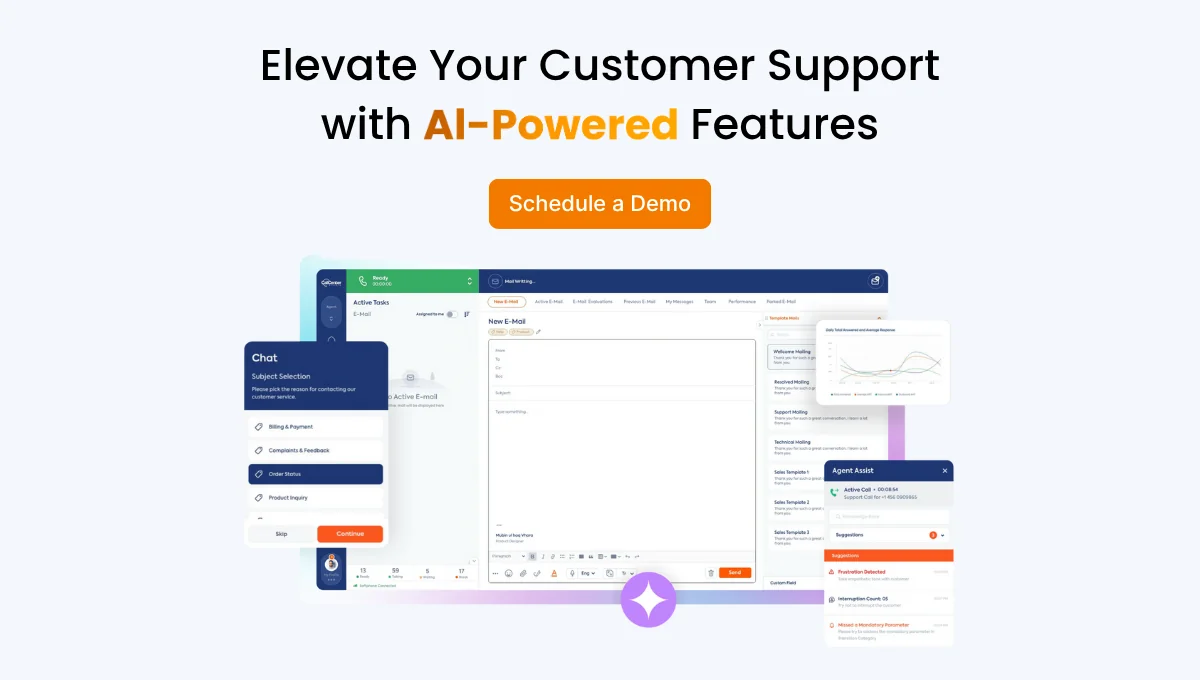
Call Center Studio’s CX Insights brings AI-powered conversation analytics directly into your contact center operations.
- Real-time sentiment tracking shows exactly how customers feel
- Intent detection surfaces what customers actually need
- And conversation trend analysis connects patterns across thousands of calls
No months-long setup. No guesswork. Just smart insights from every single call.
Let’s do this. Book a demo. See what AI-powered CX actually looks like.