
We’ve all had that moment where we’re stuck in “IVR Jail”.
It’s frustrating.
It’s slow.
And honestly, it makes people want to switch to a competitor before they even get a chance to talk to a human. But :
👉 What if your IVR actually knew who was calling?
👉 What if it acted like a helpful assistant who’s been briefed on your situation before you even opened your mouth?
In this article, we are going to show how managers can design an IVR so that their customers do not feel that they are trapped.
Now, let’s dive deeper into it.
Moving Past the “One-Size-Fits-All” Menu
Most IVRs are pretty basic.
They treat every caller the same. Even if the caller is a brand-new lead looking to spend thousands of dollars or a loyal customer who’s had to call three times this morning because their order is missing.
The good news is here is that data-driven IVR changes the narrative.
Because data-driven IVR doesn’t just sit there and wait for the caller to get frustrated and start mash-keying “0” to reach a person.
These IVRs look at the data behind the call in real-time. It does a quick “data dip” into your CRM or helpdesk software and asks a few smart questions like:
- “Is this person calling back about a support ticket that’s still open?”
- “Did they just come from our ‘Flash Sale’ landing page two minutes ago?”
- “Are they a high-value client who should probably skip the line entirely?”
Instead of making them navigate a maze of options that don’t apply to them, you can use personalized call routing to send them exactly where they need to go. As you see, it’s like having a concierge who recognizes you the moment you walk through the door.
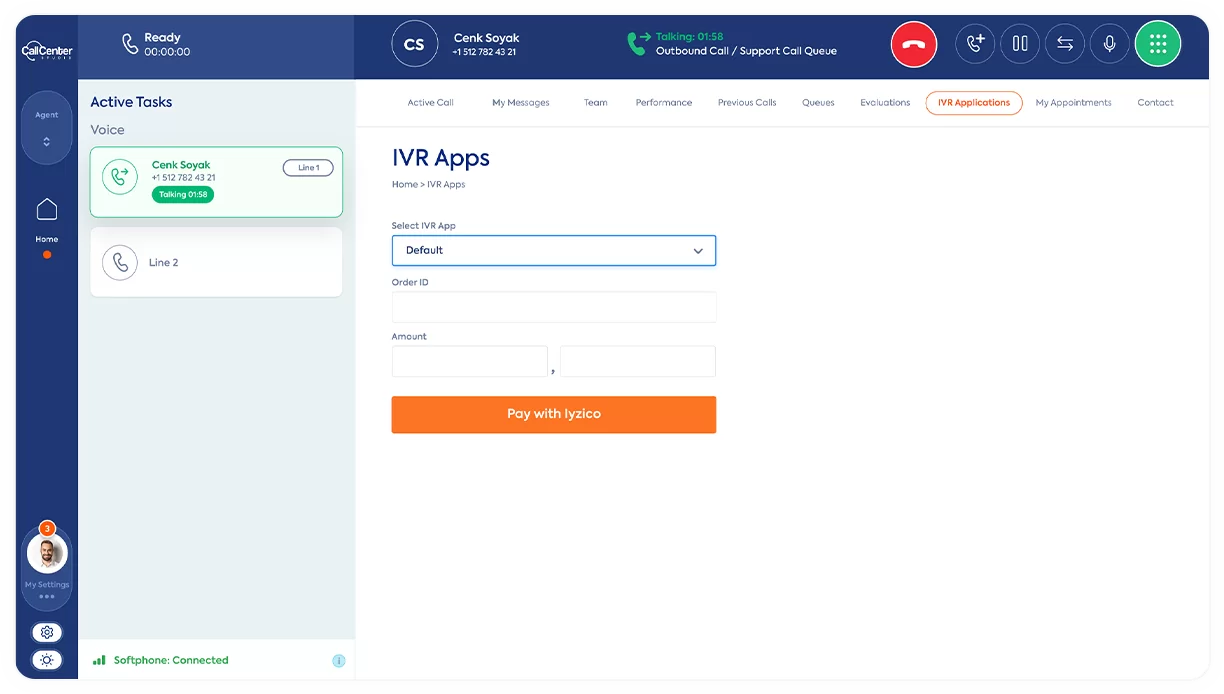
Smart Ways to Use Your Call Data (Without Making it Weird)
If you want to get the most out of inbound call optimization, you need to look at the right data points. You don’t need to know their favorite color, but you do need to know their “intent.”
Let’s see how successful managers are actually using this data under the 3 titles:
- History & Frequency
- Campaign Analytics, and
- Intent Signals
1. The “I Know Why You’re Calling” Move (History & Frequency)
Customers’ internet goes out, they call, they get a “fix,” and then ten minutes later, it breaks again.
When they call back, the last thing they want to hear is “Press 1 for Technical Support.”
That is why you need to use intelligent IVR there.
Intelligent IVR sees that your customer just called. It recognizes the customer’s phone number and says:
“Hey, I see you were just talking to us about your connection. Want to go back to the specialist you were just working with?”
This is a massive win for Average Handle Time (AHT) because the agent doesn’t have to spend five minutes listening to the customer explain (and explain angrily) that they already called.
2. Matching the Vibe (Campaign Analytics)
The most powerful side of call tracking analytics is that it can tell you exactly which ad, email, or social media post prompted the call.
Because, apparently, if someone calls a specific number from a “Black Friday VIP” email, they shouldn’t be hearing about your general services or your business hours. Since they are in a “buying” mood. You need to route them straight to your top-tier sales queue, ensuring your best leads get the best service instantly.
And this is customer journey orchestration at its finest: the transition from “online browsing” to “on-the-phone buying” becomes seamless.
3. Cutting to the Chase (Intent Signals)
Healthcare is arguably the most suitable sector for illustrating the impact of customer intent. Believe it or not, patients subconsciously link your doctors’ performance with your agents’ performance; they may think, “If this hospital can’t even manage a simple call, how can they be expected to handle a complex health issue correctly?”
A landmark study published in the American Journal of Managed Care (AJMC) titled “Wait Times, Patient Satisfaction Scores, and the Perception of Care” analyzed over 11,000 patient responses.
- The Finding: They found that longer wait times (both in-office and on the phone) were negatively correlated not just with “satisfaction,” but with the patient’s confidence in the care provider and the perceived quality of care.
And second of all, when people call a hospital, they’re usually stressed. If a patient has a history of calling every Tuesday to confirm their physical therapy appointment, why make them listen to a menu about billing or directions?
So use contextual call routing and let your IVR lead with: “Are you calling to confirm your appointment for tomorrow?”
Why This Actually Matters for Your Bottom Line
As you already recognize, personalizing your IVR isn’t a fancy trick to show off at board meetings. It’s a massive efficiency booster that saves real money. It creates huge benefits for call resolutions, customer satisfaction, and agent well-being. 👇
- Better First-Call Resolution (FCR): When you use personalized call routing to send a caller to the right expert the first time, the problem actually gets fixed. No more “Let me transfer you to my supervisor” or “Sorry, that’s a different department.”
- Happier Customers (Who Actually Stick Around): Nobody likes repeating their account number or their life story three times. When the IVR “knows” them, frustration levels drop. Happy customers don’t churn; they stay.
- Agents Who Can Actually Do Their Jobs: When the IVR handles the “who are you and why are you here” part, agents get a “screen-pop” with all the info they need before they even say hello. They can skip the boring data entry and get straight to solving the problem. This makes the whole call go smoother and keeps your staff from burning out.
Conclusion: Stop Testing Your Customers’ Patience
Every time a customer calls you, they are giving you a goldmine of data. If you’re just letting that data sit in a spreadsheet while your callers suffer through a boring, static menu, you’re leaving money on the table.
By using call tracker data to fuel your IVR, you stop being that “company that’s impossible to get a hold of” and start being the brand that actually gets it. It’s time to move past the 1990s-style menus and start treating your callers like the individuals they are.
Want to see how your IVR could actually be… dare we say, helpful?
Grab a quick, no-pressure demo with Call Center Studio. We’ll show you how to use real-time analytics to make your IVR the smartest (and most liked) member of your team.