
As we navigate high call volumes, it’s easy to get lost in the “noise” of the data. But great thinkers have long reminded us that communication is about shared experience.
“People will forget what you said, people will forget what you did, but people will never forget how you made them feel.” — Maya Angelou
In a contact center, this is the golden rule. A customer might forget that they waited 5 minutes in a queue, but they will never forget the agent who spoke to them with genuine kindness and resolved their anxiety.
Maintaining a human touch when you are the 50th caller of the day for an agent requires intentionality. It isn’t just a passive feeling; it’s an active skill.
“Empathy is a quality of attention as much as it is a quality of feeling.” — Gary Zukav
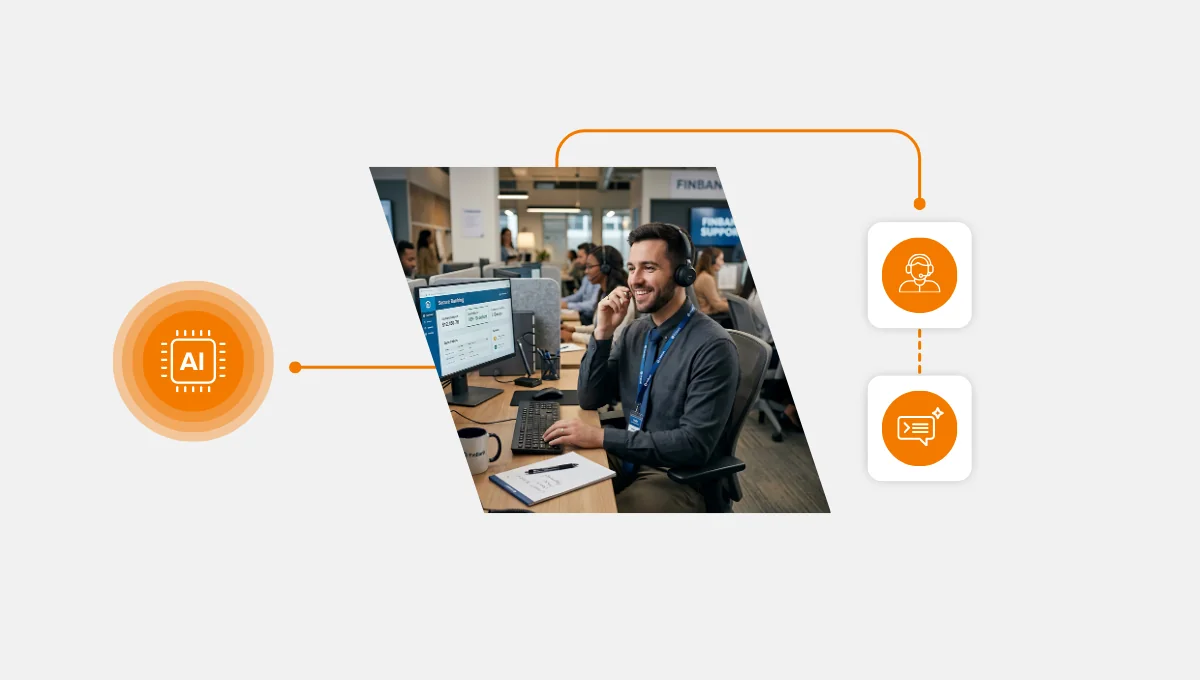
This “quality of attention” is exactly what Call Center Studio’s AI Agent Assist protects. By handling the data retrieval and the “boring” parts of the job, the AI allows the agent to give their full attention to the customer.
During peak seasons, the pressure to “clear the queue” often leads to interrupted sentences and rushed explanations. However, as we’ve seen, when a patient or customer feels understood, they are 25% less likely to abandon the call and significantly more likely to remain loyal to your brand.
After these reminders lets dive into the Best Practices for maintaining empaty in CX, especially in during high call volume
1. The Strategy of Structured Empathy
Under time pressure, agents often dive straight into problem-solving to lower their Average Handle Time (AHT). However, skipping the “empathy step” usually leads to longer calls because the customer feels unheard and repeats themselves.
Best Practice: The Acknowledge-Validate-Pivot Method
- Acknowledge: “I see you’ve been waiting for ten minutes, and I appreciate your patience.”
- Validate: “I understand how frustrating it is to have your service interrupted right before a deadline.”
- Pivot: “Let’s look at your account together so I can get this fixed for you immediately.”
By using structured opening statements, agents provide the “human touch” in the first 10 seconds, which lowers the customer’s emotional temperature and leads to a more collaborative interaction.
2. Active Listening Under Time Pressure
It sounds counterintuitive, but the faster the pace, the more important it is to slow down the listening. Empathetic communication requires picking up on “sub-text”—the sigh of frustration or the tone of confusion.
When agents use active listening, they summarize what the customer said before acting. This reduces repeat contacts because the issue is solved correctly the first time. As noted in our Manager’s Guide to Advanced Reporting, focusing on “First Call Resolution” (FCR) is a much better indicator of empathetic success than simply tracking call duration.
3. Leveraging AI and Real-Time Analytics
How can a supervisor know if empathy is slipping across a team of 100 agents during a Black Friday surge? They can’t—at least not manually. This is where Call Center Studio turns data into a support system.
- Sentiment Analysis: Our platform uses AI to monitor the “emotional pulse” of live calls. If a customer’s sentiment turns sharply negative, the system flags it on the supervisor’s dashboard in real-time.
- AI Agent Assist: Instead of agents scrambling through PDFs while a customer waits, AI Agent Assist surfaces the right information instantly. This allows the agent to keep their eyes (and mind) on the customer’s emotional state rather than a search bar.
- Predictive Routing: High volume becomes manageable when calls are routed not just to the “next available” agent, but to the right agent. Predictive routing matches high-emotion cases with your most resilient, empathetic specialists.

The Role of Visibility: Using CX Insights to Protect Your Team
Empathy isn’t just about how we treat customers; it’s about agent performance under pressure. When agents feel unsupported, they burn out, and their empathy levels drop.
The Data Factor:
Research shows that companies using AI to support agent workflows see a 35% reduction in after-call work. This “breathing room” is what allows an agent to stay empathetic for the next caller.
With Call Center Studio’s CX Insights, supervisors get a “helicopter view” of the floor. They can identify stress points such as a specific product flaw causing a spike, and intervene. As we discussed in our guide on AI for Black Friday, visibility allows you to move from “panic mode” to “monitor mode.”
| Feature | How it Supports Empathy | Operational Result |
| Real-Time Dashboards | Spots rising wait times before they hit “boiling point.” | Proactive staffing adjustments. |
| Sentiment Detection | Alerts managers to calls that need a “silent whisper” or takeover. | Prevents escalations and protects agent wellbeing. |
| Intelligent Routing | Balances the load so no single agent is overwhelmed. | Maintains consistent service quality. |
4. Balancing Efficiency with Human Connection
The secret to high call volume management is realizing that efficiency and empathy are not at odds. In fact, empathy is a shortcut to efficiency. An empathetic agent handles the emotional baggage of the call quickly, allowing the technical resolution to happen faster.
Call center best practices now dictate that we move away from “The Final Scoreboard” (how many calls were made) and toward “Biometric Reporting” (how the calls felt). By using real-time analytics, you can see if your team’s tone is staying professional and warm even at 4 PM on a busy Monday.
5. Training for Resilience
To sustain empathy, agents need more than a script; they need a professional partner in their technology. When a platform is easy to use, agents are happy. When agents are happy, customers feel it.
As seen in the Florence Nightingale Success Story, moving to a cloud-based, AI-driven platform like Call Center Studio reduced call abandonment by 25%. When customers don’t have to wait as long, they are less angry, making it much easier for agents to remain empathetic.
Conclusion: Don’t Let the Volume Drown Out the Voice
High call volumes are a test of a company’s culture. If you treat your contact center as a cost center, empathy will be the first casualty of a spike. But if you treat it as a value center, supported by Call Center Studio, you can turn a high-pressure moment into a loyalty-building opportunity.
By combining human-centric training with AI-powered agent assistance and CX Insights, you ensure that your team has the tools to stay calm, the data to stay smart, and the time to stay human.
Is your team equipped to stay empathetic during the next surge?
Don’t wait for the next peak to find out. Book a personalized demo with Call Center Studio today and discover how our cloud contact center solutions can help you balance volume with value.